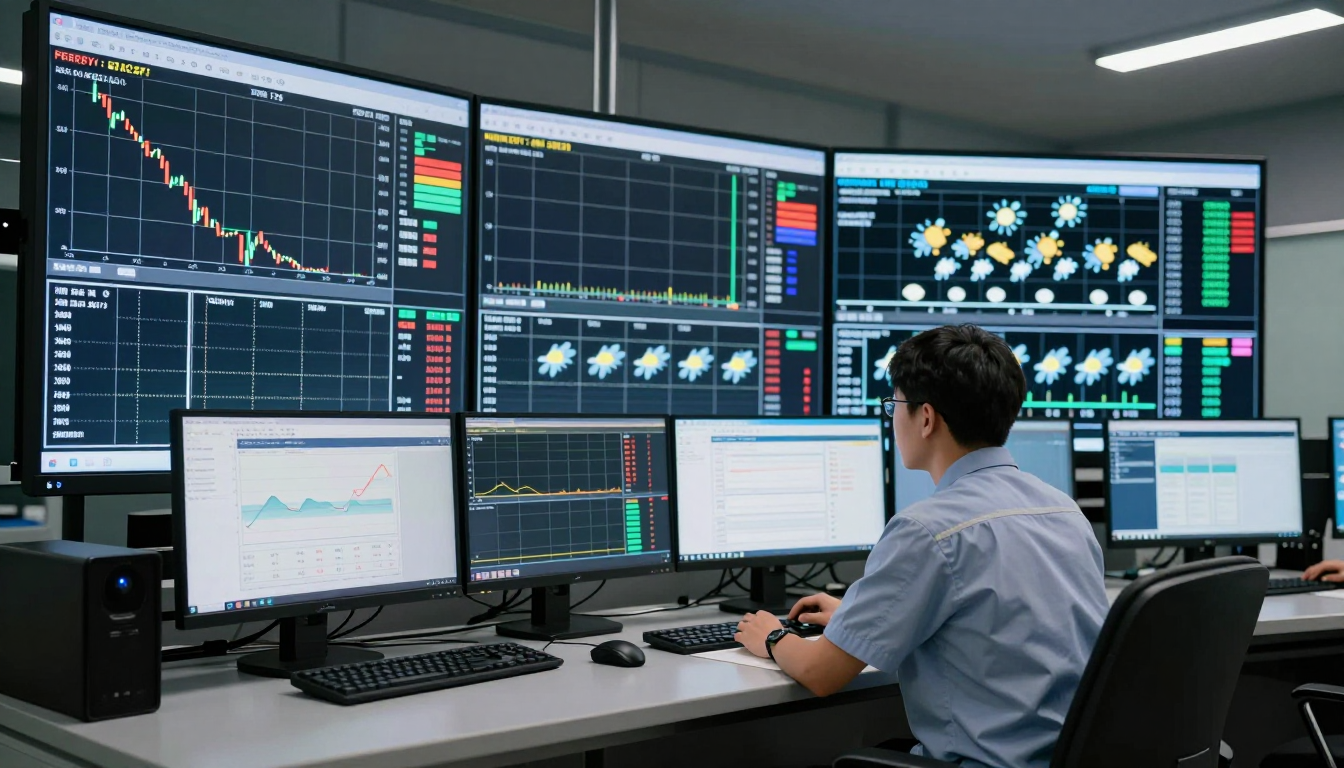
The Evolution of IBM Granite models
In the high-stakes arena of industrial planning, the difference between a profitable quarter and a logistical nightmare often hinges on a single variable: the accuracy of time-series forecasting. As we approach 2026, organizations are moving beyond simple linear projections toward complex, AI-driven predictive engines. At the forefront of this shift is the IBM Granite series, a suite of models specifically engineered for enterprise applications. Unlike general-purpose LLMs, Granite is designed to handle the rigorous demands of corporate data, providing a robust foundation for businesses looking to turn volatile historical patterns into actionable foresight.
The most significant architectural leap in this space is the transition from single-model predictions to ensemble forecasting. While a single model might identify a primary trend, it often struggles with the “noise” inherent in real-world data. By employing an ensemble approach, IBM Granite leverages multiple models simultaneously to cross-reference signals and mitigate individual errors. This methodology acknowledges that no single algorithm can perfectly capture every nuance of global markets or local supply chains. By combining different mathematical perspectives, the system creates a more stable and reliable output for decision-makers who cannot afford to guess.
Precision in time-series data is not just a technical luxury; it is a strategic necessity for 2026 industrial goals. Industries ranging from manufacturing to retail are facing unprecedented volatility in raw material costs and consumer behavior. To navigate this, companies need systems that can anticipate demand spikes before they happen and identify potential bottlenecks in the supply chain weeks in advance. The source report highlights how these specialized models are becoming the backbone of corporate intelligence, allowing firms to move from reactive troubleshooting to proactive strategy.
Tackling Complexity with Ensemble Techniques
The true power of ensemble techniques lies in their ability to filter out statistical noise in highly volatile environments. In a single-model setup, an outlier—such as a one-time geopolitical event or a sudden weather anomaly—can skew the entire forecast for months. Ensemble methods mitigate this by weighing multiple models against each other; if one model overreacts to a spike while another remains steady, the system can produce a balanced average. This collaborative intelligence ensures that the final output is grounded in consistent patterns rather than reacting impulsively to every minor fluctuation in the data stream.
These techniques find immediate and practical application in sectors where timing is everything, such as energy demand management and stock market analysis. For example, power grid operators must predict spikes in electricity demand to prevent blackouts during extreme weather. By using ensemble forecasting, they can combine models that account for historical usage with those that factor in real-time weather patterns. Similarly, in the world of finance, traders use these methods to navigate the erratic movements of global markets, ensuring that their algorithmic strategies are resilient enough to withstand sudden and unpredictable shifts in investor sentiment.
Beyond just smoothing out noise, ensemble models are uniquely equipped to handle seasonality and trend irregularities in massive datasets. Large-scale logistics networks often deal with “spiky” data caused by holiday shopping seasons or periodic industrial cycles. A single model might struggle to distinguish between a permanent shift in consumer behavior and a temporary seasonal peak. By employing an ensemble of Granite models, companies can isolate these specific variables, allowing them to identify long-term growth trends while simultaneously preparing for short-term spikes. This nuanced understanding is what allows modern enterprises to scale efficiently without losing sight of the underlying data reality.
Ultimately, the move toward ensemble forecasting represents a maturation of the AI industry. We are moving away from the “magic” of a single perfect algorithm and toward a sophisticated architecture of collaborative intelligence. By leveraging the IBM Granite framework, organizations can build systems that are not only more accurate but also more resilient to the unpredictable nature of the global economy. As we head toward 2026, the ability to synthesize multiple data points into a singular, reliable forecast will be the defining competitive advantage for leaders in every major industrial sector.
Scaling Intelligence for the 2026 Landscape
While the architectural superiority of ensemble forecasting provides the mathematical foundation, the true power of the IBM Granite series lies in its ability to scale across massive, heterogeneous datasets. By integrating directly with IBM Cloud infrastructure, these models move from isolated experiments into production-grade engines. This seamless integration ensures that high-frequency data—from IoT sensors on a factory floor to global shipping manifests—can be processed in real-time. For the 2026 landscape, this means that predictive analytics is no longer a batch process performed at the end of the month; it is a live, breathing pulse that allows companies to pivot their operations the moment a trend deviates from the norm.
One of the primary hurdles in enterprise AI has historically been the “one size fits all” problem. General-purpose models often struggle with the nuances of specific industrial domains, such as the unique volatility of energy markets or the seasonal complexities of retail logistics. Granite addresses this by allowing for deep customization within specific industry verticals. By fine-tuning these models on proprietary datasets, companies can create specialized versions that understand the “noise” of their specific sector. This specialization minimizes hallucinations and maximizes precision, ensuring that a forecast for a pharmaceutical supply chain is governed by different logic than one used for high-frequency financial trading.
The competitive advantage offered by such high-precision predictive analytics cannot be overstated in an increasingly volatile global economy. As we move toward 2026, the “first-mover” advantage will belong to those who can reduce the margin of error in their projections. When a company can predict a component shortage three months in advance or identify a surge in regional demand before it peaks, they gain significant leverage over competitors. This isn’t just about efficiency; it is about resilience. By leveraging Granite’s robust architecture, organizations can transform their data from a passive archive into a proactive strategic asset that informs everything from inventory levels to capital investment.
However, the transition to such advanced systems is not without its hurdles. Implementing these models requires a sophisticated data governance framework to ensure that the information feeding the Granite engine is clean, secure, and compliant with evolving regulations. The risk of “garbage in, garbage out” remains a constant threat in time-series forecasting. Therefore, the success of these implementations depends as much on the quality of the underlying data pipeline as it does on the sophistication of the AI model itself. Companies must invest in robust data engineering to ensure that their predictive models are built on a foundation of high-integrity information.
Furthermore, the integration of Granite into the corporate workflow necessitates a shift in internal roles. Data scientists will spend less time cleaning raw data and more time architecting complex ensemble systems. Operations managers will move away from reactive troubleshooting and toward proactive scenario planning. The goal is to create a symbiotic relationship where the machine handles the heavy lifting of pattern recognition and statistical processing, while human experts focus on high-level strategy and decision-making. This shift represents a fundamental evolution in how we approach industrial planning, moving toward a collaborative model between human intuition and machine intelligence.
Related Articles
Conclusion
As we look toward 2026, the IBM Granite series stands as a cornerstone of the next generation of predictive technology. By moving away from simplistic models and embracing ensemble forecasting and specialized vertical tuning, it provides a roadmap for how enterprises can navigate uncertainty with confidence. The shift is not just about better numbers on a spreadsheet; it is about creating a more responsive and resilient global infrastructure. As automated forecasting becomes increasingly precise, the role of human expertise will evolve into one of oversight and creative strategy, where humans decide the direction while AI provides the map. In this new era of precision, how will your organization redefine the boundary between human intuition and machine-driven certainty?