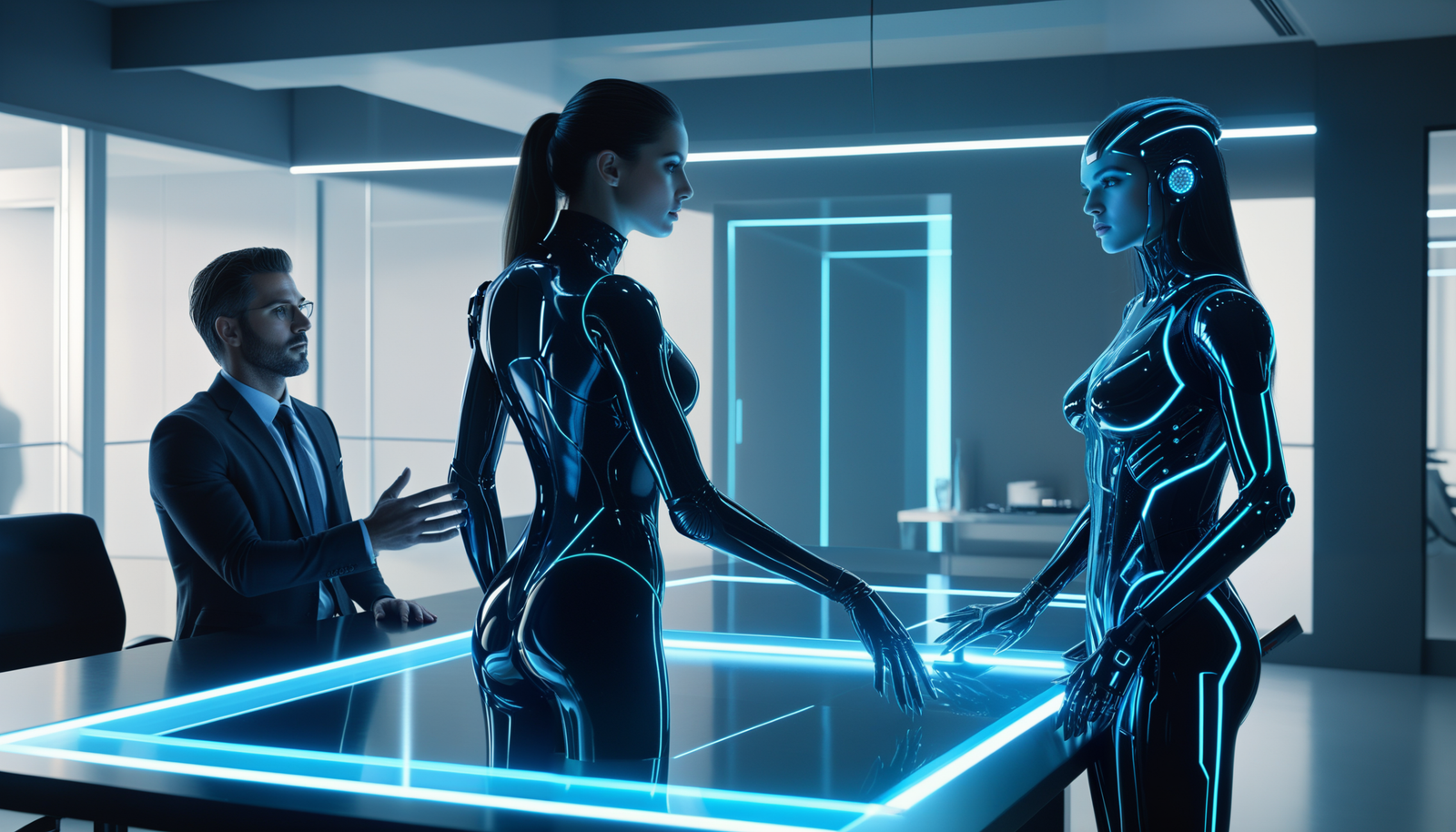
The drumbeat for agentic AI has been growing louder, and now, two of the biggest names in tech are answering the call with a resounding declaration: the future of autonomous computing is here, and it’s built on a unified stack. NVIDIA and Microsoft have officially partnered to deliver a comprehensive technology foundation for AI agents, stretching from the silicon on your desktop to the vast expanse of the cloud. This isn’t just about better models; it’s about making those models truly intelligent, capable of long-running reasoning, and deployable anywhere. The era of the NVIDIA Microsoft AI Agent is upon us, and it promises to redefine our digital interactions.
NVIDIA Microsoft AI: A Unified Front for the Agentic Revolution
At the recent Microsoft Build event, the strategic alliance between NVIDIA and Microsoft took center stage, unveiling a commitment to provide developers with a seamless, end-to-end platform for agentic AI. This unified stack is designed to simplify the complex journey of building, testing, and deploying AI agents that can learn, reason, and interact autonomously. The ambition is clear: to democratize agentic AI, making it accessible and powerful enough to tackle real-world challenges across diverse environments.
The current landscape of AI development, particularly for sophisticated agentic systems, is often fragmented. Developers grapple with disparate hardware, software, and deployment targets. This partnership directly addresses that friction. By integrating NVIDIA’s unparalleled GPU acceleration and AI software like CUDA and TensorRT with Microsoft’s expansive Azure cloud services and Windows ecosystem, they are creating a cohesive environment. This isn’t merely a convenience; it’s a fundamental shift that empowers developers to focus on innovation rather than infrastructure headaches. The goal is to accelerate the transition from impressive AI demos to robust, deployable AI agents that can genuinely augment human capabilities.
From Edge to Cloud: The Integrated Architecture
The core strength of the NVIDIA Microsoft AI collaboration lies in its deeply integrated architecture, ensuring AI agents can operate efficiently and consistently across a spectrum of computing environments:
- Windows Devices: Imagine AI agents running directly on your Windows PC, leveraging integrated or discrete GPUs for real-time processing. This opens doors for highly personalized AI applications, local processing of sensitive data, and instant responsiveness without constant internet dependency. It’s a significant boost for edge AI, bringing intelligence closer to the user.
- Azure Cloud: For tasks demanding immense computational resources, massive data access, or scalable deployment, AI agents can seamlessly transition to Azure. Microsoft’s cloud platform offers elastic scalability, robust security, and a rich suite of complementary AI services, simplifying the management and operation of complex models at scale.
- On-premises Deployments: Recognizing the critical needs of enterprises with stringent data security requirements or a desire for complete infrastructure control, the NVIDIA-Microsoft solution also supports on-premises deployment. This ensures organizations can harness the benefits of AI agents while adhering to internal regulations and compliance policies.
- Does AI Omit Religion? New BYU Research Shapes the Future of AI in 2026
- How AI government data tools will shape policy in 2026
This deployment flexibility is a game-changer. It allows developers to choose the optimal environment for each specific application, ensuring consistent performance and a seamless user experience, regardless of where the AI agent resides. It’s a pragmatic approach to a complex problem, acknowledging that one size rarely fits all in the world of advanced AI.
The Synergistic Power of Hardware and Software
Realizing the vision of truly intelligent AI agents demands a powerful marriage of hardware and software. NVIDIA brings its formidable GPU prowess, which has become the de facto standard for accelerating AI workloads, from large language model (LLM) training to complex inference. Their software platforms, including CUDA for parallel computing and TensorRT for optimized inference, are the backbone for running these sophisticated models efficiently.
Microsoft, in turn, provides a sprawling software ecosystem. This includes the ubiquitous Windows operating system, the comprehensive Azure cloud platform, and developer tools like Azure AI Studio. This integration means developers gain easy access to everything needed, from model building to deployment and ongoing management. Crucially, the optimization of AI models for NVIDIA’s architecture within Azure promises maximum performance, reduced latency, and enhanced responsiveness for AI agents. Developers looking to dive deeper into NVIDIA’s offerings can explore their official website: nvidia.com.
The Stakes: What This Means for the Industry and Users
This partnership isn’t just another tech announcement; it’s a foundational move that signals a significant acceleration in the journey towards pervasive agentic AI. AI agents, with their capacity for learning, autonomous decision-making, and complex task execution, are poised to become indispensable assistants across virtually every sector – from hyper-personalized customer service and automated business processes to advanced scientific research.
We can anticipate an explosion of innovative AI agent applications built on this unified platform. Imagine smarter virtual assistants on your personal devices that truly understand context, highly efficient factory automation systems, or personalized healthcare solutions that adapt to individual needs in real-time. The combined might of NVIDIA’s hardware and Microsoft’s software ecosystem will undoubtedly accelerate the pace of innovation, delivering tangible benefits to both enterprises and end-users. This collaboration is a critical step in realizing the vision of an AI-powered world, where technology serves humanity more effectively and intelligently.
Furthermore, this alliance significantly bolsters the advancement of edge computing in AI. Enabling AI agents to run directly on Windows devices offers substantial advantages: reduced latency, enhanced data privacy, and robust offline capabilities. These benefits are paramount for applications requiring instantaneous responses or processing sensitive data without the need to transmit it to the cloud. Microsoft’s continued investment in AI is evident, and further insights can be found on their dedicated AI blog: blogs.microsoft.com/ai.
Conclusion: The Dawn of Truly Autonomous AI
The collaboration between NVIDIA and Microsoft to construct a unified stack for agentic AI deployment represents a pivotal moment, shaping the very future of artificial intelligence. With this robust foundation, developers are armed with powerful tools to create intelligent, flexible, and highly effective AI agents capable of operating across any environment, from personal devices to the expansive cloud. This not only opens the door for groundbreaking applications by 2026 but also heralds a new era of seamless human-machine interaction. The question is no longer if autonomous AI agents will arrive, but how quickly they will transform our world – and with this partnership, that transformation is set to happen faster than ever before.