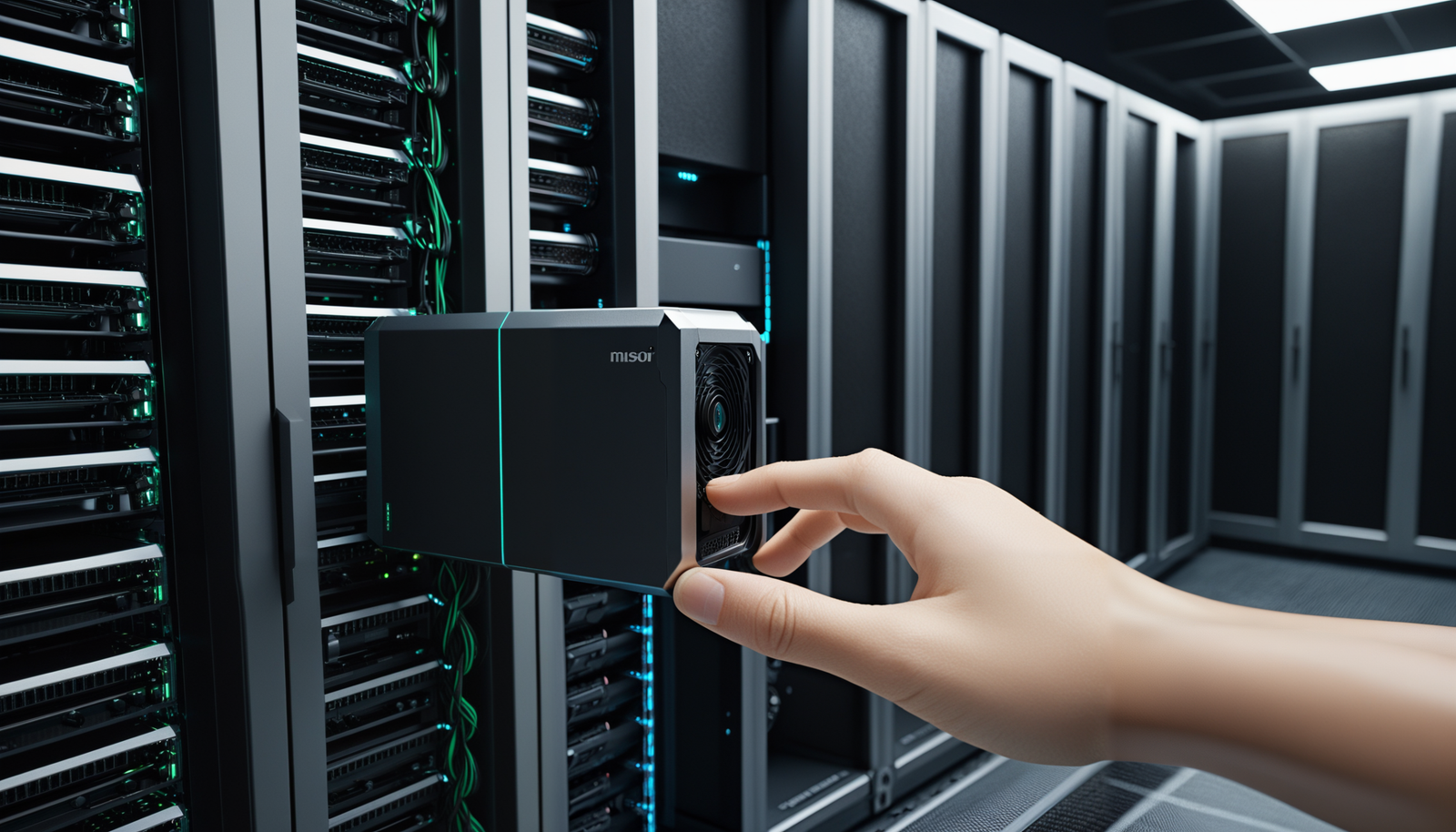
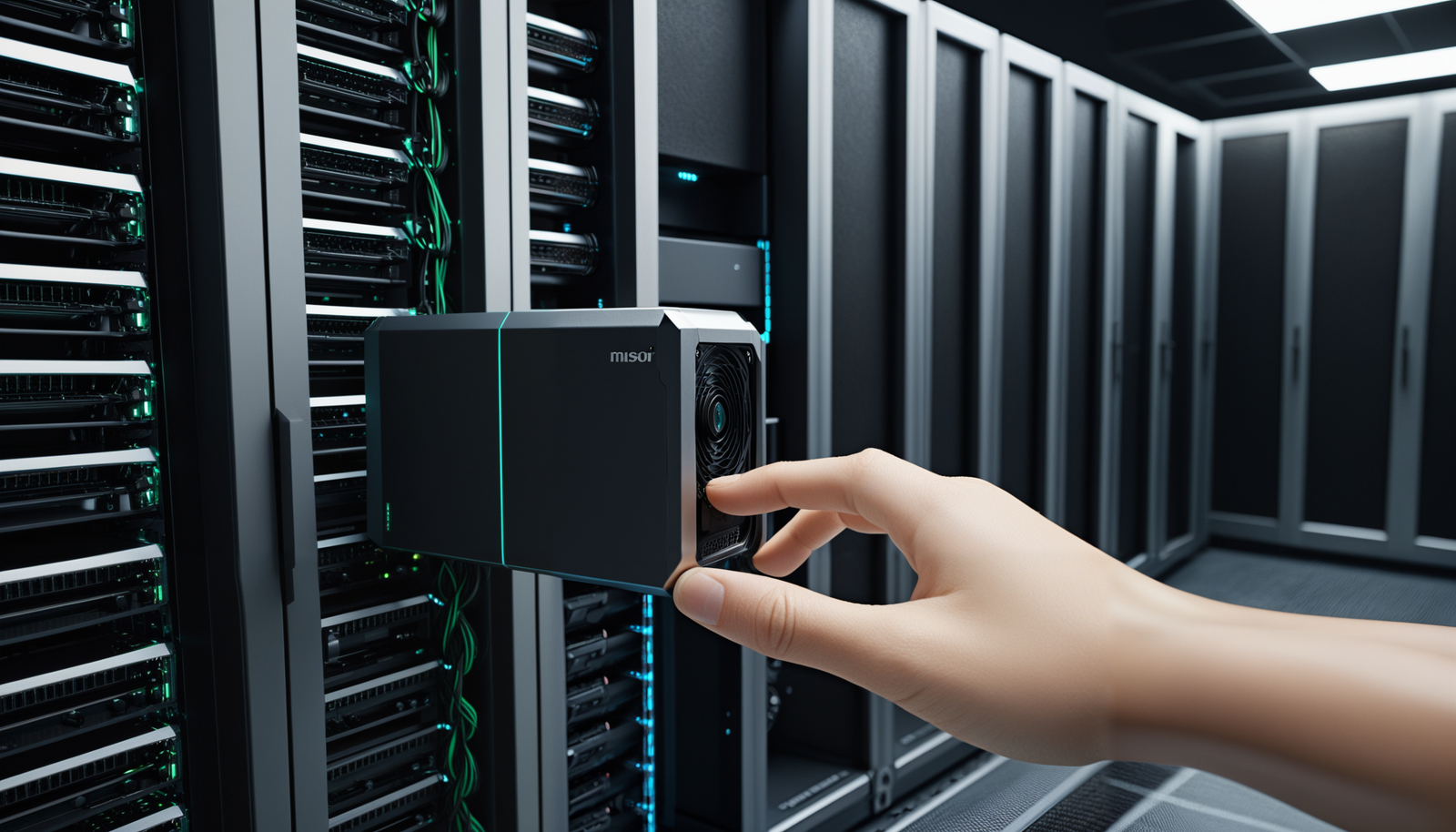
The cloud has been the undisputed king of AI for the last decade. We expected, and largely received, that the most powerful models—the LLMs that write our emails, the vision models that recognize our pets, the predictive engines that drive our cars—would all live in massive, centralized data centers. But the landscape just got fundamentally complicated, and the shift is moving away from the mega-data center and right onto your desk, into your pocket, and into devices like the new Reachy Mini.
This isn’t merely a feature update; it is a strategic, architectural declaration. The Reachy Mini’s move to operate fully locally, meaning its sophisticated AI models run entirely on its own hardware without constant reliance on external cloud APIs, is perhaps the clearest signal yet that the age of centralized AI supremacy is waning. Instead, we are entering the era of true on-device AI, where power, privacy, and performance are decoupled from bandwidth and corporate gatekeepers.
The Sovereignty of the Edge: Why Going Local Matters
For years, the convenience of the cloud masked its inherent weaknesses. Every time your device sends data—be it a photo, a query, or a biometric reading—it introduces latency, a point of failure, and a third party into the equation. Cloud AI is powerful, yes, but it is inherently distant. The Reachy Mini’s local processing capability changes the calculus entirely. It means that complex, resource-intensive tasks—like advanced natural language processing or real-time object recognition—can happen instantly, entirely within the device’s silicon.
From a user perspective, the benefits are immediate and profound. There is zero latency, making interactions feel instantaneous and natural. Crucially, there is a massive boost to privacy. By keeping the data local, the device never has to transmit sensitive information over the internet to a server farm in another hemisphere. This shift is critical in an increasingly regulated world that is demanding greater data sovereignty from both consumers and governments.
This architectural pivot isn’t just about making a product more reliable; it’s about making the technology fundamentally more trustworthy. It represents a mature understanding that the best AI is the AI that doesn’t need to call home.
Beyond Convenience: The Pillars of Local AI Adoption
The industry has long debated the trade-offs between cloud scale and edge efficiency. The Reachy Mini’s success suggests that the hardware and algorithmic efficiency required to run powerful models locally are finally reaching a tipping point. This move is underpinned by three key pillars:
- Efficiency and Optimization: Modern AI models are being ruthlessly optimized—quantized, pruned, and distilled—to run on smaller, less power-hungry chips. The barrier to entry for local AI has dropped dramatically.
- Resilience: Local operation means the device functions perfectly even when the internet is slow, intermittent, or completely unavailable. For mission-critical applications (medical devices, industrial monitoring, etc.), this resilience is non-negotiable.
- Latency Reduction: Removing the network hop is the ultimate performance upgrade. For real-time interactions, this is the defining feature.
- World Models AI: The Predictive Engine Driving Tech in 2026
- Beyond the Desk: Why AI Agents Won’t Be Your 2026 Employees
- Can an AI Tax Fund the Future of Work? Texas Rep’s Plan for 2026
- The AI Workplace Balance: How Companies Are Guiding Employees in 2026
- Mythos AI: How Anthropic’s New Model Will Reshape Tech by 2026
What this means for developers is an entirely new paradigm: building for the constraints of the device, rather than relying on the limitless compute power of the cloud. This requires rethinking entire software stacks and optimizing the AI models themselves to fit the physical silicon.
The Competitive Stakes: Who Wins the Decentralization Race?
The Reachy Mini is not an isolated experiment; it is a bellwether. Its commitment to on-device AI forces every major player—from chip manufacturers (NVIDIA, Qualcomm) to platform providers (Apple, Google)—to accelerate their own edge computing strategies. The race is no longer about who has the largest data center, but who can build the most efficient, trustworthy, and powerful edge device.
For the industry, the stakes are enormous. Companies that successfully master local AI will capture massive market share by solving the core problems of privacy, latency, and connectivity. Those that remain overly reliant on the cloud will find themselves vulnerable to network instability and increasingly stringent data regulations. The future of AI is decentralized, moving into a mesh of intelligent, self-contained endpoints.
This architectural shift is reshaping the entire tech ecosystem, moving the locus of power away from the central cloud providers and back toward the user’s physical environment. The era of the always-connected, cloud-dependent device is drawing to a close. The smart, private, and instantaneous future belongs to the local processor. Understanding the full implications of the edge is critical for any tech company planning its next five years.