The New Architects of the Bottom Line
For decades, the Chief Financial Officer was often viewed as the company’s ultimate gatekeeper—the sober realist who balanced the books and guarded the treasury. But in an era defined by hyper-growth, volatile markets, and increasingly fragmented revenue streams, that traditional role is undergoing a radical transformation. Today, CFOs are no longer just looking for ways to cut costs; they are racing to manage the sheer complexity of modern data. To do this, they are turning to artificial intelligence and autonomous agents as their primary weapons against administrative friction.
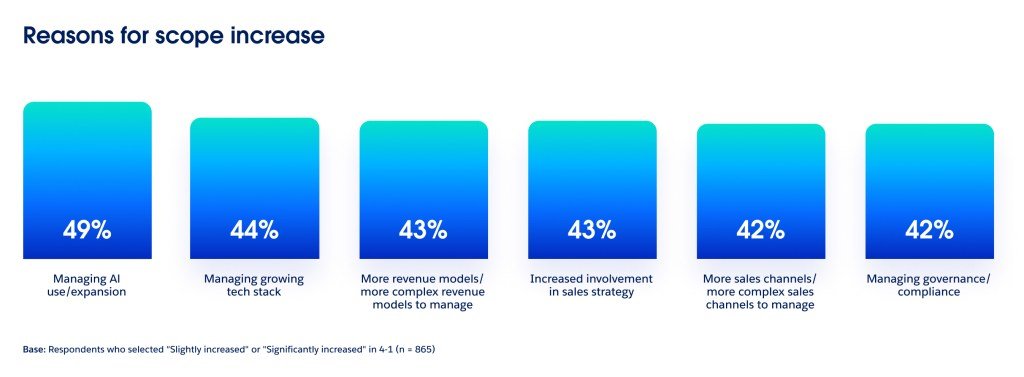
The shift isn’t just about adopting a new piece of software; it is about fundamentally reimagining how financial oversight functions in a digital-first economy. As revenue models become more complex—involving multi-channel sales, tiered subscriptions, and global compliance hurdles—the manual labor required to track every cent becomes nearly impossible for human teams alone. This complexity creates a bottleneck that can stifle growth. By integrating AI into the core of their operations, finance leaders are attempting to automate the mundane so they can focus on high-level strategy.
Recent findings in a source report highlight this pivotal transition. A double-blind survey of 865 finance leaders across three continents reveals that the role is currently in a state of flux. While the fundamental responsibility of financial oversight remains the core mission, the tools used to achieve it are evolving rapidly. Advanced AI has emerged as a dual-purpose solution: it acts both as a sophisticated tool to streamline internal workflows and as an intelligent layer that can interpret complex data points automatically.
One of the primary drivers behind this adoption is the need for real-time accuracy in revenue management. In traditional systems, reconciling sales data often happened weeks after a transaction occurred, leading to delayed insights. AI agents change this dynamic by processing information as it happens. By automating tasks like invoice matching, contract analysis, and payment reconciliation, these systems eliminate human error and provide executives with an instantaneous view of the company’s financial health. This shift allows the finance department to move from being a reactive reporting unit to a proactive strategic partner.
Furthermore, the rise of autonomous agents is specifically targeting the “noise” that plagues large-scale enterprises. These AI agents can navigate through massive datasets to identify patterns that might escape a human eye, such as subtle inconsistencies in billing or potential risks in contract terms. By filtering out this noise, CFOs can dedicate their mental energy to long-term planning and capital allocation. The goal is no longer just to manage the numbers, but to use those numbers to navigate the complexities of an increasingly unpredictable global marketplace.
This evolution marks a significant milestone in corporate history where technology moves from the periphery of the office to the very center of decision-making. As these tools become more sophisticated, the line between human oversight and machine execution will continue to blur. For the modern CFO, the challenge is no longer just about balancing a ledger; it is about mastering an ecosystem where AI serves as the backbone for every transaction, ensuring that growth remains sustainable even as the underlying systems become exponentially more complex.
The Rise of the Autonomous Ledger
As these complex revenue streams collide with global regulatory demands, the human capacity to process every transaction in real-time is reaching its breaking point. This is where autonomous agents enter the frame. Unlike traditional software that follows a rigid “if-this-then-that” logic, AI-driven agents can interpret nuance. They can reconcile mismatched invoices across different currencies, flag suspicious patterns in procurement, and automatically adjust tax calculations based on shifting regional laws. For the modern CFO, this means moving from a reactive posture—correcting errors after they occur—to a proactive stance where the system identifies and resolves friction before it ever hits a human dashboard.
The shift toward autonomous systems is fundamentally changing the internal labor dynamics of the finance department. Traditionally, large teams were required to manually chase down missing data or cross-reference contract terms with actual billing cycles. By deploying intelligent agents to handle these repetitive, high-volume tasks, companies can reallocate their human capital toward higher-order strategy. The role of the financial analyst is evolving from a “data gatherer” into a “decision architect.” Instead of spending forty hours a week reconciling spreadsheets, the team can spend those hours analyzing market trends and identifying new avenues for expansion, effectively turning the finance department into a growth engine rather than a cost center.
Navigating the Risks of Algorithmic Finance
However, this transition is not without significant peril. Entrusting the company’s bottom line to autonomous agents introduces new vectors of risk that traditional audits aren’t always equipped to handle. “Black box” logic in financial decision-making can lead to systemic errors if the underlying model isn’t perfectly aligned with specific corporate policies. There is also the looming shadow of cybersecurity; as financial data becomes more integrated with AI models, the surface area for sophisticated attacks expands. A single hallucination or a misinterpreted line of code in an automated billing script could result in massive overcharges or regulatory fines that could cripple a mid-sized enterprise overnight.
To mitigate these risks, the next generation of financial infrastructure must prioritize “explainability.” It is no longer enough for an AI to provide a correct answer; it must be able to provide a transparent audit trail. CFOs are demanding systems that can show exactly why a certain transaction was flagged or how a specific calculation was reached. This transparency is the bridge between trust and adoption. By building these guardrails, organizations can harness the speed of autonomous agents while maintaining the oversight necessary to satisfy regulators and shareholders alike. The goal is a “human-in-the-loop” model where AI does the heavy lifting, but humans hold the final veto.
Related Articles
The Strategic Horizon
Looking ahead, the integration of AI into financial oversight will likely become a competitive differentiator in the global market. Companies that can process data faster and with higher accuracy will have a significant advantage in capital allocation and pricing agility. We are moving toward a world where “real-time” isn’t just a buzzword for sales; it is the standard for fiscal operations. The winners in this new era will be those who successfully transition from manual oversight to algorithmic governance, turning their financial data into a dynamic asset rather than a static record of past actions.
Ultimately, the evolution of the CFO’s role mirrors the broader transformation of the modern enterprise: a move toward automated intelligence as the backbone of operations. As we move further into this era, the line between “finance” and “technology” will continue to blur until they are virtually indistinguishable. The question remains for leaders in the space: as these systems become more autonomous and capable, how much of the final decision-making power are you truly willing to delegate to the machine?