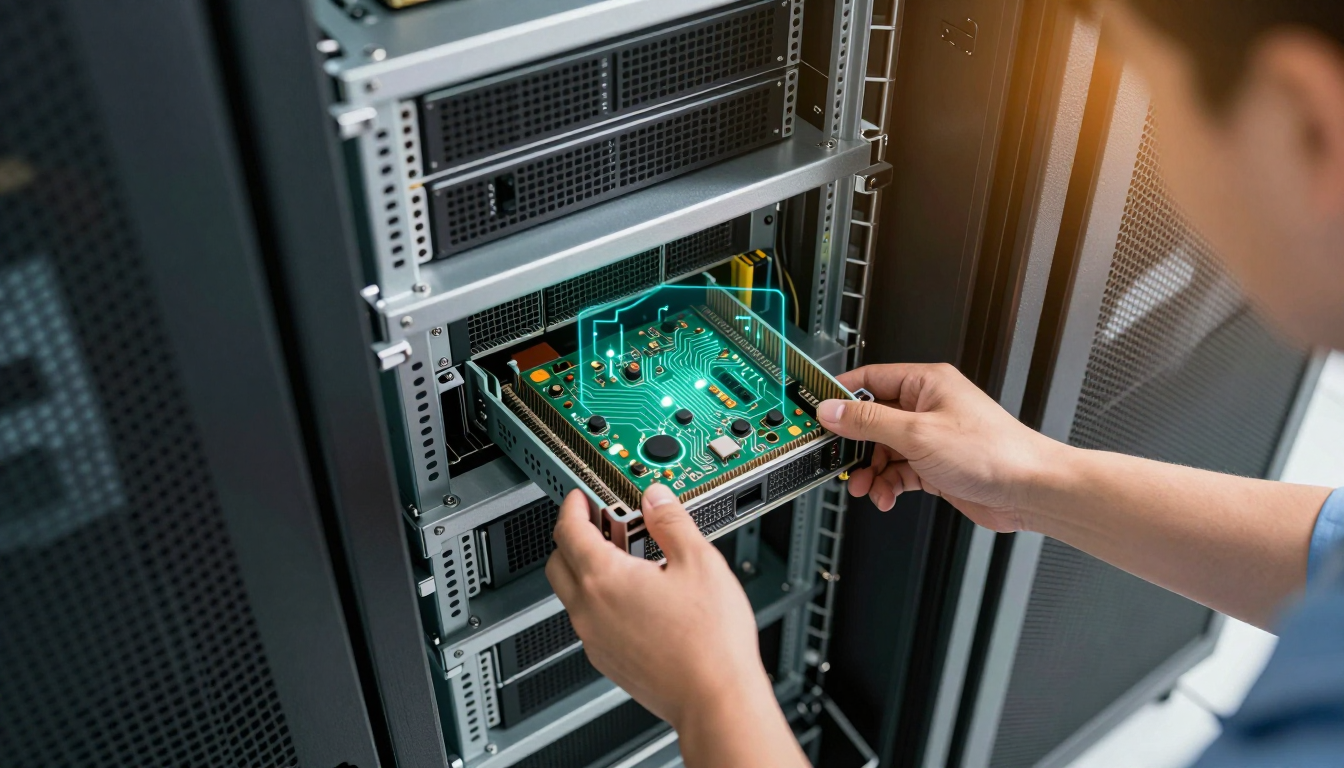
The Surging Demand for Amazon Custom Chips
For years, the cloud computing landscape was defined by a predictable hierarchy of hardware where standard, off-the-shelf processors reigned supreme. However, a seismic shift is occurring within the data center architecture as enterprise giants move toward specialized silicon to meet the insatiable demands of modern workloads. Amazon Web Services (AWS) has emerged as a primary architect of this transition, moving away from general-purpose components in favor of purpose-built chips designed for specific cloud efficiencies.
The latest financial data reveals that this is no longer just a speculative experiment for the tech giant. Demand for Amazon’s custom silicon, specifically the Graviton and Trainium lines, has surged with triple-digit growth year over year. This explosive trajectory indicates that customers are moving away from standard x86 architectures toward optimized environments. By tailoring hardware to specific tasks, AWS is providing a more streamlined path for companies looking to scale their operations without the overhead of unnecessary general-purpose features.
One of the primary drivers behind this adoption is the massive reduction in operational costs for enterprise clients. When a company runs its workloads on custom silicon like Graviton, it achieves better price-performance ratios compared to traditional processors. By optimizing the hardware at the instruction set level, Amazon allows its customers to do more with less power and fewer resources. This economic reality is forcing a fundamental shift in how developers think about infrastructure, prioritizing efficiency over the familiarity of standard hardware.
The move toward specialized silicon represents a broader trend in the high-performance computing space where “one size fits all” no longer applies. As software becomes more complex and specialized—ranging from database management to real-time analytics—the underlying hardware must follow suit. Amazon’s strategy is to create a vertically integrated stack where the hardware is purpose-built for the cloud ecosystem, ensuring that every cycle of electricity contributes directly to the user’s specific application goals rather than wasted overhead.
Breaking the Dependency on Standard Silicon
The most staggering evidence of this shift lies in the raw numbers. According to a recent source report, revenue commitments for both Graviton and Trainium have skyrocketed by more than 20x year over year. This explosive growth highlights a massive migration of workloads from standard silicon to proprietary designs. It signals that the market is no longer just curious about custom chips; it is actively migrating its core infrastructure onto them to secure better performance.
A critical component of this strategy is Trainium, which was engineered specifically to handle the grueling demands of large language models (LLMs). Training and deploying generative AI requires massive throughput and specialized memory handling that standard GPUs and CPUs often struggle to provide economically. By optimizing Trainium for these specific workloads, Amazon provides a dedicated lane for AI development, allowing companies to train models at a fraction of the cost while maintaining high speeds. This targeted approach creates a moat against the limitations of generic hardware.
By moving toward proprietary silicon, Amazon is effectively decoupling its growth from the supply chain bottlenecks and architectural constraints of standard chips. Relying on third-party manufacturers for general-purpose processors leaves cloud providers vulnerable to shortages and price fluctuations in the broader semiconductor market. By designing their own chips, AWS gains total control over the roadmap, allowing them to innovate at the speed of software. This independence is crucial for maintaining a competitive edge in an era where hardware availability can dictate the pace of technological progress.
Ultimately, this shift represents a fundamental reimagining of what a cloud provider’s role is in the modern economy. It is no longer enough to simply rent out someone else’s hardware; the most successful platforms will be those that innovate at the silicon level to solve specific problems for their users. As Amazon continues to scale its custom chip production, it isn’t just selling chips—it is selling a streamlined, optimized path for the next generation of software. The transition from general-purpose to specialized hardware marks the beginning of a new era in cloud infrastructure.
Securing the Infrastructure for 2026
The strategic pivot toward custom silicon is not merely a quest for better performance; it is a calculated move to secure Amazon’s dominance in an increasingly volatile geopolitical and economic landscape. By designing its own chips, AWS reduces its dependency on third-party vendors like Intel and AMD, who dictate the pace of innovation and pricing for standard x86 architectures. This vertical integration creates a protective moat around the cloud ecosystem. As competition intensifies among hyperscalers, owning the underlying silicon provides Amazon with the agility to iterate on hardware cycles independently of the broader semiconductor market’s fluctuations.
Furthermore, this shift has profound implications for the global semiconductor supply chain. By standardizing on internal architectures like Graviton and Trainium, Amazon can optimize its procurement strategies and manufacturing pipelines. Instead of competing for a limited pool of high-performance general-purpose chips, AWS can carve out specific production lanes for specialized silicon. This transition forces the broader industry to reconsider how it allocates resources. As more cloud giants follow suit, we may see a bifurcation in the chip market: one path for general-purpose computing and another, increasingly massive lane dedicated exclusively to custom-tailored infrastructure for high-scale cloud environments.
Looking ahead toward 2026, the evolution of AI hardware will be defined by the move away from “one size fits all” components. The next three years will likely see a frantic race to optimize inference and training specifically for large language models (LLMs) and generative AI workflows. Amazon’s investment in Trainium is a direct bet on this future, aiming to provide high-throughput machine learning capabilities without the premium costs associated with NVIDIA’s dominant H100 and B200 lines. This specialized path allows developers to optimize for specific workloads—such as real-time data processing or massive-scale neural network training—without the overhead of unnecessary features found in general processors.
However, this transition is not without its risks. Moving away from established architectures introduces significant software compatibility hurdles. Developers must adapt their codebases to run natively on ARM-based Graviton chips, which requires a fundamental shift in how applications are optimized and deployed. While the performance gains can be substantial, the initial friction of migration remains a barrier for some legacy enterprises. Nevertheless, the economic incentives—lower costs per instance and higher energy efficiency—are becoming too significant to ignore. The industry is moving toward a reality where the most efficient way to run a modern workload is on silicon designed specifically for that task.
Related Articles
Conclusion
Amazon’s aggressive move toward vertical integration marks a pivotal era in the history of cloud computing. By developing its own silicon, the company has moved from being a mere distributor of technology to a primary architect of the hardware layer. This shift ensures that the infrastructure powering the next generation of AI and high-performance computing is tailored for scale, efficiency, and cost-effectiveness. While the transition away from standard x86 architectures presents challenges in software migration, the rewards of specialized performance are becoming the new industry benchmark. As we look toward 2026, custom silicon will likely become the definitive standard for AI workloads, fundamentally reshaping how companies build and deploy their digital futures.
The rise of Graviton and Trainium signals a broader trend where the distinction between software providers and hardware manufacturers begins to blur. In this new era, the most successful cloud platforms will be those that can provide the most specialized tools for the most specific tasks. As Amazon continues to refine its custom silicon, it establishes a blueprint for how hyperscalers can survive in an era of extreme demand and supply constraints. The question remains: as custom chips become the backbone of the internet, will traditional general-purpose processors eventually find themselves relegated to a niche role in our increasingly specialized digital world?