Source: NVIDIA Blog
The AI landscape is littered with impressive demos that often struggle to translate into real-world utility. But NVIDIA, fresh off its announcements at CVPR, is making a bold play to bridge that gap. They’re not just talking about bigger models; they’re unveiling a suite of new NVIDIA physical AI agent skills designed to accelerate the development of autonomous vehicles, robotics, and vision AI systems. This isn’t just about computational horsepower; it’s about building the entire workflow around these intelligent agents, from simulating complex environments to generating crucial edge-case scenarios and robust policy training.
For too long, the bottleneck in physical AI research hasn’t been the raw intelligence of the models themselves, but the arduous process of making them interact meaningfully and safely with the physical world. Reconstructing real-world scenes, generating an infinite variety of edge cases, training policies that generalize, and rigorously evaluating performance – these are the foundational challenges NVIDIA is directly addressing. This isn’t merely an upgrade; it’s a strategic pivot to enable the next era of intelligent automation, promising profound implications for industries and everyday life.
NVIDIA’s Vision for Physical AI: Beyond the Virtual Sandbox
NVIDIA is fundamentally reshaping our understanding of AI by championing the concept of physical AI. While traditional AI often thrives in controlled, virtual environments, physical AI is engineered for seamless interaction and effective operation within the real world. This demands capabilities far beyond mere data recognition and analysis; it requires AI systems to make decisions and execute physical actions with precision, safety, and adaptability. The new agent skills are the linchpin of this vision, empowering developers to overcome the intricate challenges of simulating, training, and deploying AI systems in unpredictable real-world settings.
The critical hurdle in physical AI research isn’t just about crafting more powerful algorithms. It’s about establishing a comprehensive workflow that encompasses every stage: accurately reconstructing real-world environments, intelligently generating diverse and challenging edge-case scenarios, meticulously training robust policies, and rigorously evaluating their performance. NVIDIA’s comprehensive suite of tools and platforms directly tackles these issues, offering an end-to-end ecosystem from cutting-edge hardware to sophisticated software. This integrated approach frees researchers to focus on innovation, rather than expending resources on building every foundational component from scratch. It’s a testament to NVIDIA’s understanding that true progress in AI requires a full-stack solution.
Agent Skills: Fueling the Autonomous Revolution in Vehicles and Robotics
Accelerating Autonomous Vehicle Development
Autonomous vehicles stand as a prime example of physical AI’s transformative potential, where instantaneous and precise environmental responses are paramount. NVIDIA’s new agent skills equip developers with the ability to simulate extraordinarily complex driving scenarios, from severe weather conditions to sudden, unpredictable traffic events. This allows AI algorithms to be rigorously trained in safe, virtual environments before ever hitting public roads, drastically mitigating risks and accelerating the development cycle. A crucial highlight is the integration of advanced predictive models for pedestrian and other vehicle behaviors, enabling autonomous systems to make safer and more efficient decisions.
Platforms like NVIDIA DRIVE Sim are central to this effort, providing a powerful simulation platform where engineers can test and validate autonomous driving algorithms in a highly realistic virtual world. This encompasses the ability to replicate intricate lighting, weather, and physical conditions, alongside a vast array of traffic scenarios. With the enhanced agent skills, developers can generate millions of virtual driving miles, harvesting invaluable training data without the need for physical road tests, thereby significantly compressing development and testing timelines.
Breaking Ground in Robotics
Robotics is another sector poised for massive gains from NVIDIA’s new agent skills. From industrial manipulators to service robots, the ability to interact intelligently and flexibly with their environment is a non-negotiable requirement. These skills empower robots to learn complex tasks, ranging from delicate object manipulation to navigation through crowded spaces. NVIDIA provides the tools to simulate and train robots in virtual environments, allowing them to learn from interactions without the risk of physical damage. This opens the door to developing highly adaptable robots capable of operating across diverse settings.
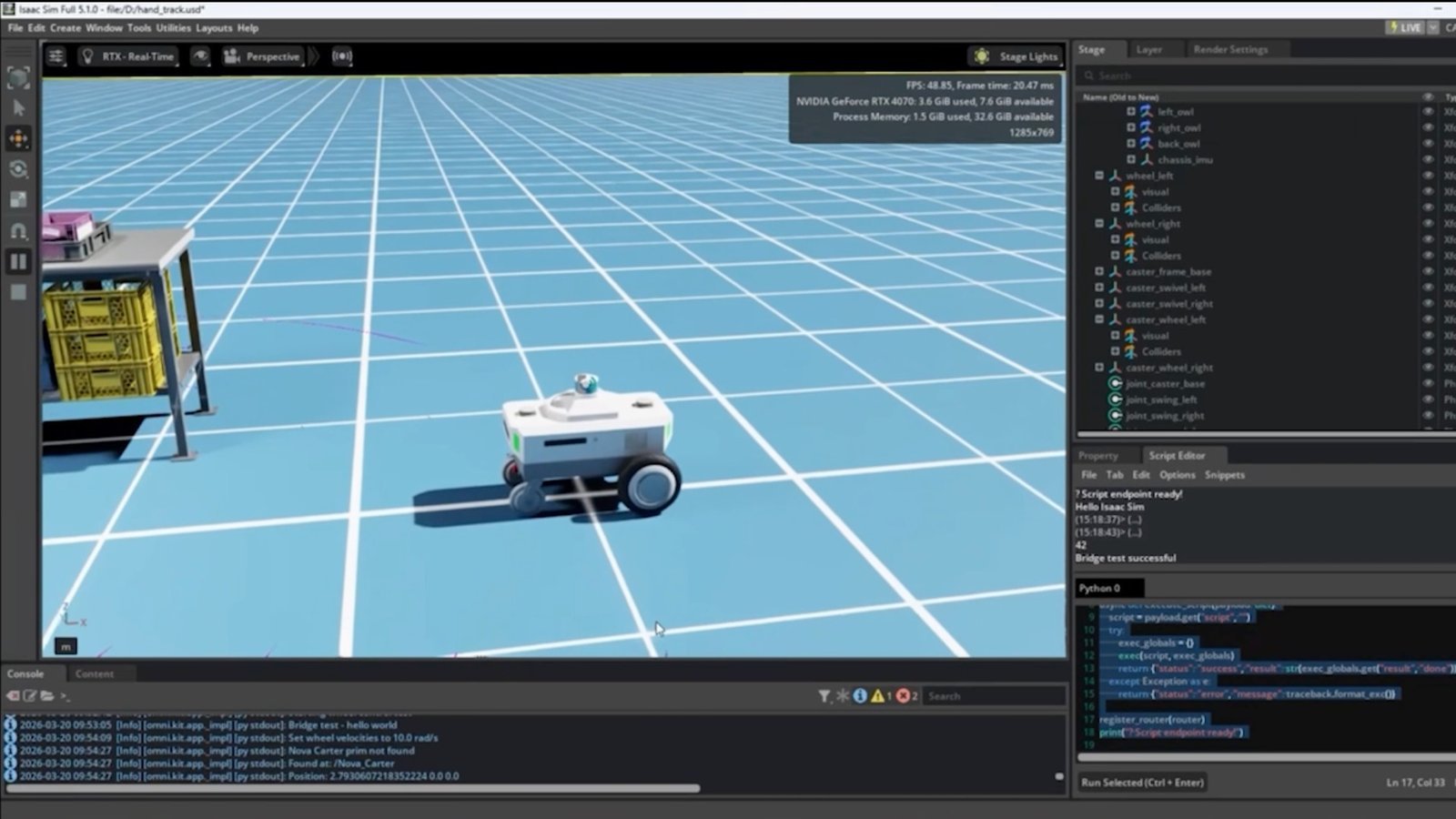
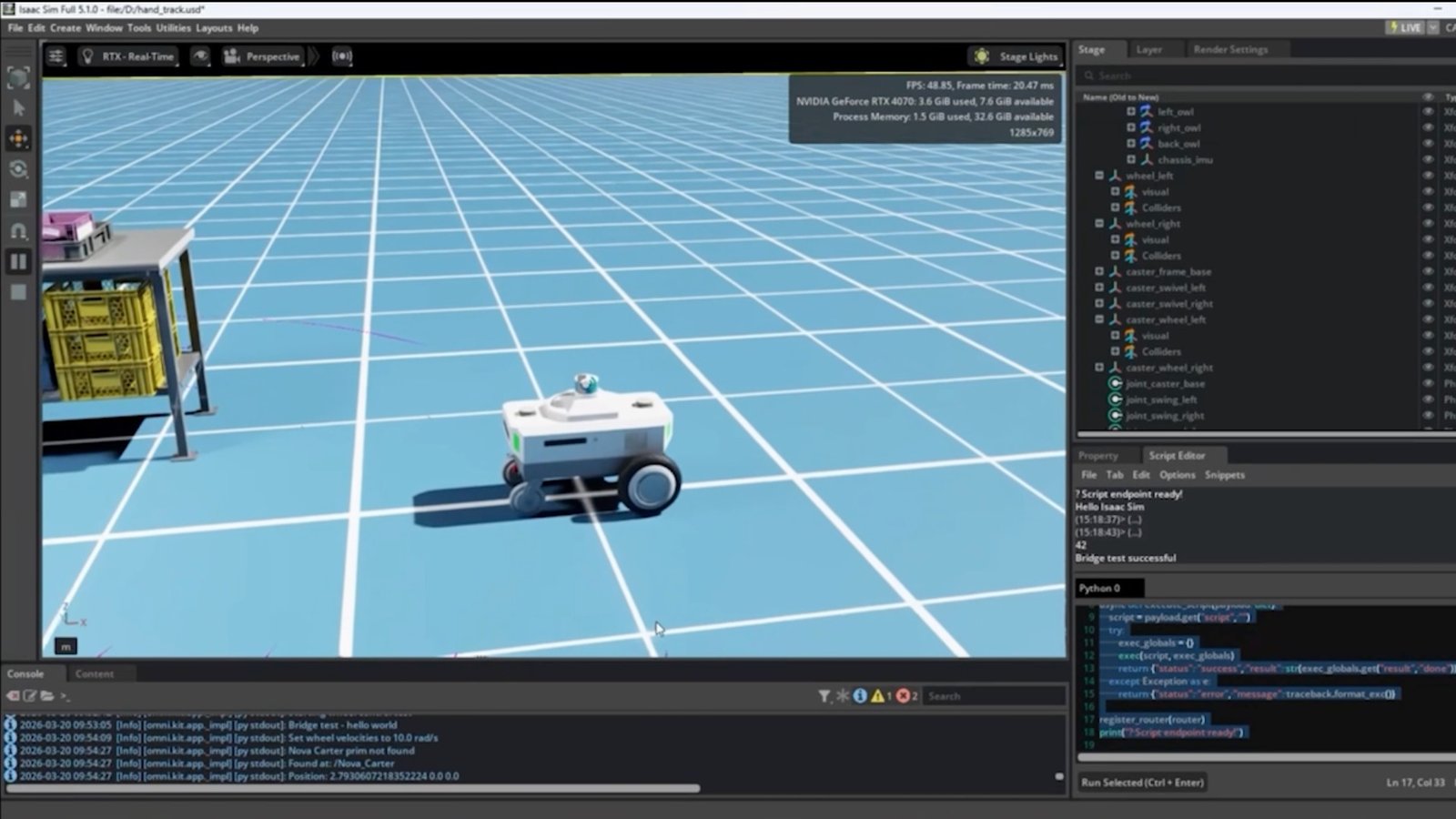
NVIDIA Omniverse, an open platform for 3D design collaboration and simulation, is playing a pivotal role in this robotic revolution. Omniverse offers a unified platform where developers can design, simulate, and train robots within a highly realistic virtual environment. Leveraging these new agent skills, robots can learn intricate tasks through advanced techniques like reinforcement learning and imitation learning, significantly enhancing their autonomy and performance in real-world applications such as logistics, manufacturing, and healthcare. The implications for productivity and safety are immense.
The Indispensable Role of Vision AI in Physical AI
Vision AI forms the bedrock of physical AI, empowering intelligent systems to ‘see’ and ‘comprehend’ the surrounding world. NVIDIA’s new agent skills deeply integrate advanced computer vision capabilities, encompassing everything from robust object recognition to precise pose estimation and sophisticated motion tracking. This is critically important for autonomous vehicles to accurately identify obstacles, pedestrians, and traffic signs, and equally vital for robots to manipulate objects and navigate their operational spaces. The synergistic combination of powerful vision AI and flexible agent skills will forge AI systems with unparalleled perception and actionable intelligence.
NVIDIA continues to push the boundaries of computer vision research, developing AI models capable of processing images and video with exceptional accuracy and speed. Deep learning and convolutional neural networks form the backbone of these advanced vision AI systems. Their seamless integration into the new agent skills allows physical AI systems to not only perceive their environment but also to understand context, anticipate future events, and make appropriate actionable decisions, thereby elevating the autonomy and safety of real-world AI applications. This holistic approach is what will ultimately differentiate successful physical AI deployments.
The Stakes: A More Autonomous and Intelligent Future
NVIDIA’s announcements at CVPR regarding new agent skills for physical AI represent a monumental leap forward in realizing the full potential of artificial intelligence in the real world. By delivering a comprehensive and robust toolkit, NVIDIA is empowering researchers and developers to conquer complex challenges, from cutting-edge simulation to rigorous training and seamless deployment of advanced AI systems. The relentless evolution of NVIDIA physical AI promises a future where autonomous vehicles, robots, and vision AI systems operate with unprecedented intelligence, safety, and adaptability. This isn’t just about technological advancement; it’s about fundamentally reshaping industries, enhancing safety, and improving quality of life. The implications for a more automated and intelligent future, perhaps even sooner than 2026, are profound, and the race to harness these capabilities is just beginning. The question isn’t if physical AI will change our world, but how quickly, and in what unforeseen ways.