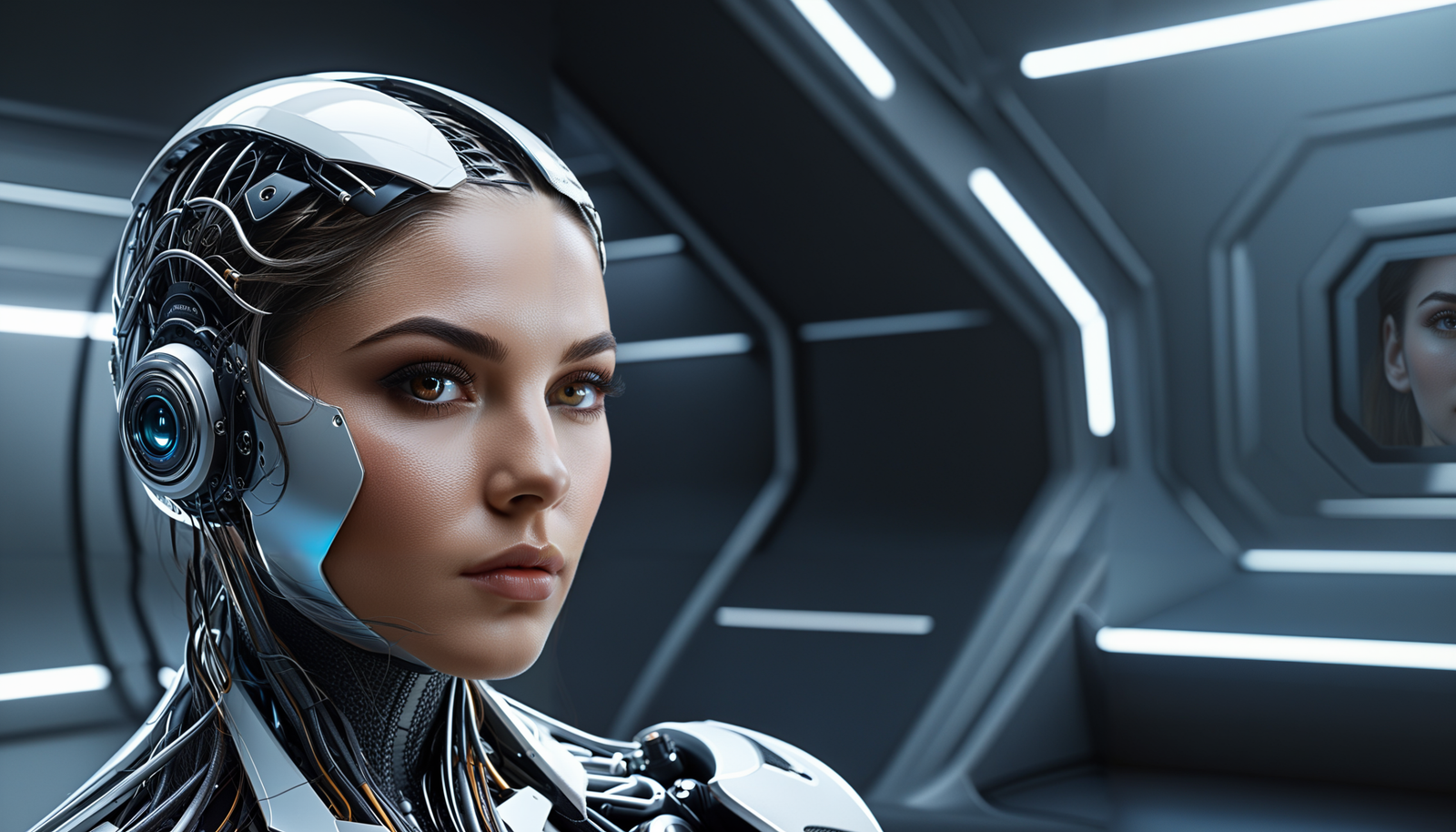
The Ghost in the Machine is Getting a Body
For the past two years, the public consciousness has been dominated by the ethereal glow of Large Language Models. We have been enchanted and terrified by chatbots that can compose poetry, write functional code, and mimic human nuance with unsettling precision. However, a tectonic shift is occurring beneath the surface of the tech industry. The era of purely digital intelligence is maturing into something far more physical. While we have been mesmerized by AI that speaks, the next frontier belongs to AI that moves. We are moving from the chat box to the factory floor, and from the smartphone screen to the autonomous limb.
This transition represents a fundamental evolution in how we perceive artificial intelligence as a tool for human progress. While generative AI serves as a cognitive multiplier, it remains confined to the digital realm of information processing. Physical robotics, however, offers a tangible revolution in labor and logistics. By integrating advanced neural networks with sophisticated hardware, engineers are creating machines capable of navigating unpredictable environments and performing complex manual tasks. The goal is no longer just to have a machine that can think about a problem, but one that can physically manipulate the world to solve it.
Investors and tech giants are beginning to realize that the ultimate “killer app” for AI isn’t necessarily a more creative chatbot, but a more capable robot. This realization is driving massive capital toward companies specializing in humanoid forms and automated systems. The integration of computer vision and real-time spatial awareness allows these machines to interact with human environments in ways previously reserved for science fiction. As the complexity of these interactions grows, the demand for robust hardware that can execute software commands becomes the primary driver of growth in the robotics sector.
The financial markets are already reflecting this shift in sentiment toward tangible automation. Investors are looking beyond the hype of generative text and toward the infrastructure of the physical world. This pivot is highlighted by the growing interest in specialized indices that track the intersection of high-tech manufacturing and intelligent systems. As noted in the source report, the focus is shifting toward how these technologies will redefine industrial productivity and domestic labor. The bet is that the most valuable AI of the next decade will be the one that can fold laundry or assemble a car.
To understand why this shift is happening now, we must look at the convergence of three distinct technological milestones: advanced machine learning, high-torque actuators, and sophisticated sensor fusion. Previously, these fields operated in silos, but the explosion of compute power has allowed them to merge into a unified stack. A robot today does not just follow a pre-programmed script; it uses a neural network to interpret visual data and decide how to move its limbs in real-time. This “embodied AI” is what will bridge the gap between digital intelligence and physical utility, creating a new generation of machines that can function independently in our world.
This movement toward robotics isn’t just about replacing human workers; it is about expanding the limits of what humans can achieve with technology. By offloading repetitive, dangerous, or physically taxing tasks to autonomous systems, we unlock new possibilities for human creativity and safety. The transition from chat-based interaction to physical execution marks the maturation of AI from a novelty into a fundamental pillar of modern infrastructure. As the dust settles on the initial hype of generative text, the real work begins in the workshops where the next generation of embodied machines is being forged and tested.
The Hardware Revolution: From Pixels to Pistons
If generative AI was the brain, embodied AI is the nervous system and the musculature. This transition is powered by a convergence of high-torque actuators, advanced vision systems, and tactile sensors that allow machines to perceive the physical world in real-time. Unlike a chatbot that processes tokens on a server, a humanoid robot or an autonomous warehouse drone must navigate the chaotic unpredictability of physics. It must understand friction, weight, and spatial depth. This requires a shift from massive, static datasets toward “world models”—simulations that allow an AI to predict how a physical object will react when touched or moved by a robotic arm.
The stakes for this transition are monumental for global manufacturing and logistics. We are moving toward a world where the “last mile” of production is automated by machines capable of handling delicate tasks, such as sorting groceries or assembling intricate electronics. Companies are no longer content with robots that can only perform one repetitive motion in a caged environment. They want versatile systems that can be reprogrammed on the fly to handle diverse tasks. This flexibility represents the holy grail of industrial automation, promising to alleviate labor shortages and increase production speeds in ways that traditional, hard-coded robotics never could.
The Friction of Reality: Risks and Hurdles
However, moving intelligence into the physical realm introduces a new category of risk. A hallucination in a text box is an inconvenience; a hallucination in a robotic arm can be catastrophic. If an autonomous vehicle misinterprets a shadow as a pedestrian, or a warehouse robot malfunctions and strikes a human worker, the consequences are immediate and physical. Beyond safety, there is the massive hurdle of “edge cases.” The real world is messy—it contains spilled liquids, uneven pavement, and unpredictable human behavior. Training an AI to navigate these nuances requires immense amounts of high-quality spatial data, which is far harder to collect than the text found on the internet.
There is also a significant geopolitical and economic dimension to this shift. The race for embodied AI is a race for autonomy in critical infrastructure. Nations that master the ability to deploy autonomous fleets for construction, agriculture, and defense will gain a massive competitive advantage. This creates a high-stakes environment where intellectual property regarding motor control and spatial reasoning becomes as valuable as the underlying neural networks. The industry is currently in a frantic scramble to standardize these systems, moving away from niche prototypes toward scalable, general-purpose machines that can operate across different industries without constant manual recalibrations.
The New Synthesis of Intelligence
Ultimately, the marriage of large language models and physical robotics creates a feedback loop that will redefine our relationship with technology. When a robot can understand a verbal command, interpret the intent behind it, and then execute the physical movement to fulfill that goal, the distinction between “tool” and “agent” begins to blur. We are moving toward an era of ambient automation where the machines we interact with are not just passive objects, but active participants in our environment. This evolution will redefine labor, safety, and the very boundaries of what we consider “intelligent” systems.
As we stand on this threshold, we must weigh the immense productivity gains against the ethical implications of a world where machines perform the majority of physical labor. We are building a future where the digital ghost finally inhabits a body, capable of shaping our physical reality as much as it shapes our information landscape. The transition from pixels to pistons is not just an engineering milestone; it is a fundamental shift in the human experience of technology. As these machines begin to move among us, we must ask ourselves: are we prepared for a world where the line between digital intelligence and physical agency becomes virtually invisible?