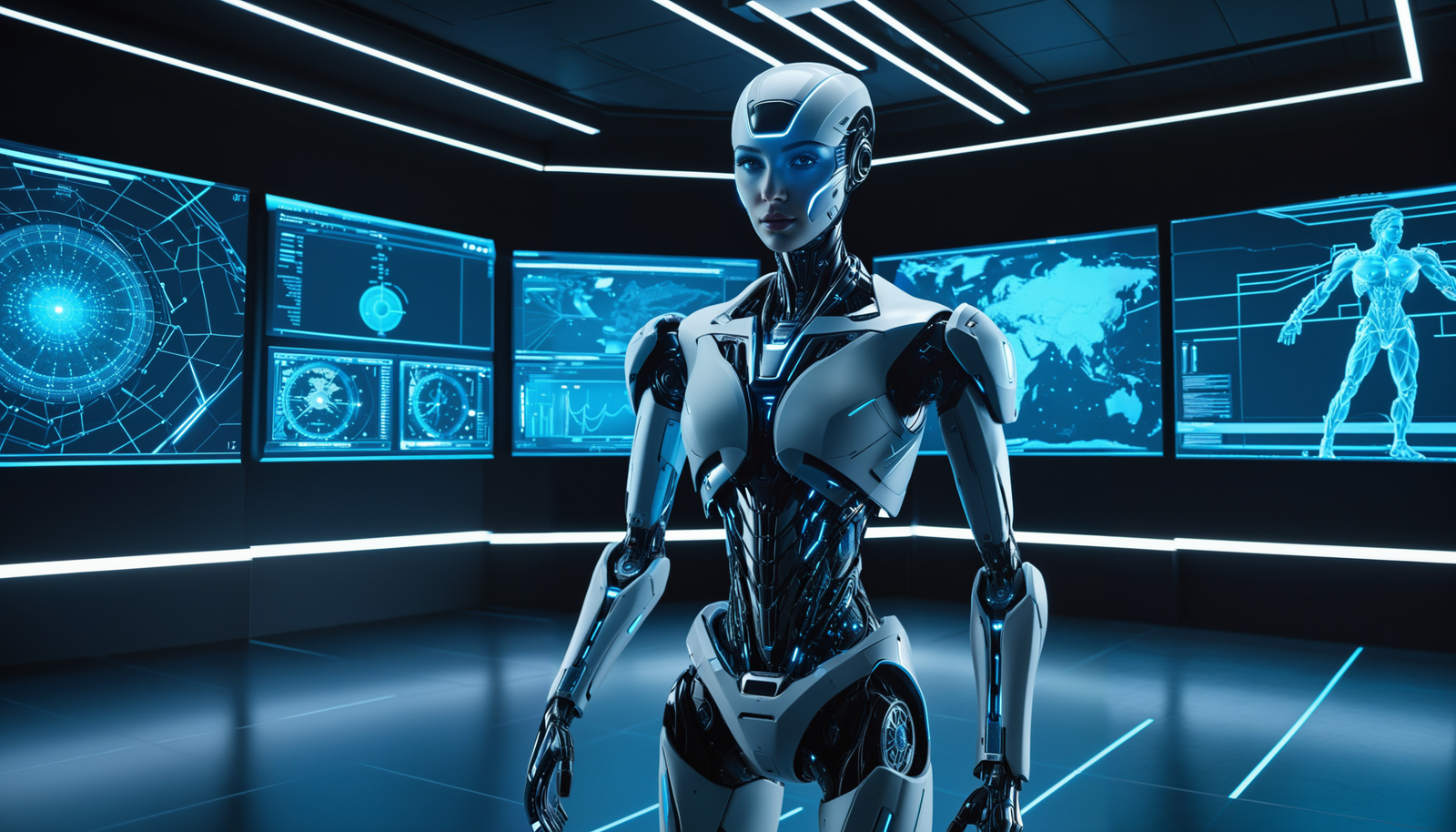
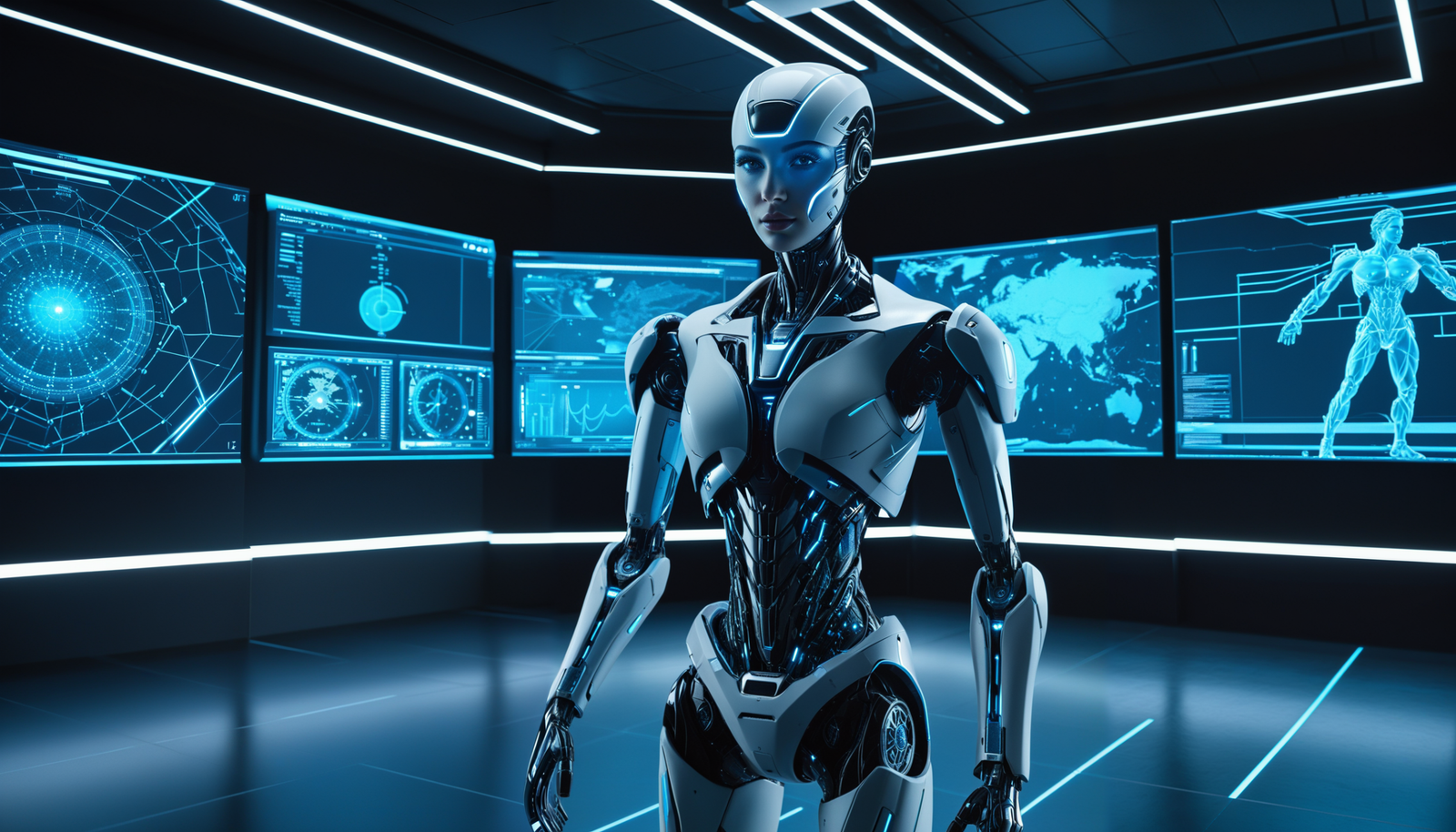
The clunky, often uncanny valley-inducing robot animations of yesteryear are rapidly becoming a relic. As artificial intelligence continues its relentless march forward, the demand for truly lifelike and nuanced digital representations of robots is skyrocketing. This isn’t just about visual flair; it’s about simulating complex physical interactions, conveying subtle ’emotions,’ and creating believable narratives. At the forefront of this revolution is NVIDIA’s powerful Cosmos Predict 2.5 model, and crucially, the sophisticated fine-tuning techniques of LoRA and DoRA that are unlocking its full potential for hyper-realistic robot video generation.
For any AI model, no matter how robust its initial training, the path to specialized excellence lies in fine-tuning. It’s the difference between a generalist and a master craftsman. In the intricate world of robot video generation, where every joint movement, every interaction with an environment, and every simulated ‘expression’ matters, generic models simply won’t cut it. Fine-tuning allows us to take a pre-trained powerhouse like Cosmos Predict 2.5 and meticulously sculpt its capabilities, enabling it to learn the minute intricacies of robot motion and behavior from smaller, highly specific datasets. This process is paramount to achieving the fluid, natural, and utterly convincing robot videos that will define the next generation of digital content.
The Imperative of Fine-Tuning for Advanced Robot Video Generation
NVIDIA Cosmos Predict 2.5 is an impressive foundational model, engineered to anticipate physical interactions and movements with remarkable accuracy. However, to transcend mere prediction and truly generate diverse, authentic robot videos, it requires a surgical approach to optimization. Think of it as teaching a prodigy a highly specialized dance routine; while they have the inherent talent, they need specific instruction to master the nuances.
This is where fine-tuning becomes indispensable. By exposing Cosmos Predict 2.5 to targeted datasets, we can imbue it with a deep understanding of particular robot kinematics, interaction protocols, or even stylistic movement patterns. The goal is not just to make robots move, but to make them move believably, with the weight, inertia, and responsiveness expected in real-world scenarios. Without this tailored optimization, the output, while technically correct, would lack the organic fluidity that distinguishes cutting-edge digital content from its predecessors. This is the crucial step in bridging the gap between simulation and photorealistic reality, a critical factor for industries ranging from entertainment to industrial design.
LoRA and DoRA: Precision Tools for AI Sculpting
The challenge with fine-tuning large AI models has historically been the immense computational cost and time required to update billions of parameters. Enter LoRA and DoRA, two groundbreaking techniques that offer a more efficient and effective path to specialization.
LoRA (Low-Rank Adaptation): The Efficient Sculptor
LoRA revolutionized the fine-tuning landscape by demonstrating that we don’t need to retrain an entire model to achieve significant improvements. Instead of modifying all existing weights, LoRA injects a small number of low-rank matrices into the model’s layers. These matrices act as lightweight adapters, learning task-specific information without disturbing the model’s vast pre-trained knowledge. This dramatically reduces the number of trainable parameters, saving colossal amounts of compute resources and training time.
For robot video generation, LoRA allows developers to fine-tune NVIDIA Cosmos Predict 2.5 to master specific robot gaits, expressive gestures, or interaction sequences without ‘forgetting’ its broader understanding of physics and motion. This agility is a game-changer, enabling rapid iteration and customization for diverse applications, from animating a specific industrial robot performing a complex assembly to creating a whimsical character for an animated film.
DoRA (Decomposed Low-Rank Adaptation): The Master Detailer
Building upon LoRA’s success, DoRA takes fine-tuning to an even higher level of precision. DoRA decomposes the low-rank updates into two distinct components: a magnitude component and a direction component. By adjusting both independently, DoRA can capture a richer, more granular understanding from the fine-tuning data, leading to superior output quality compared to traditional LoRA.
This enhanced granularity is particularly potent for robot video generation. DoRA empowers NVIDIA Cosmos Predict 2.5 to learn incredibly subtle and complex movements – how a robot’s grip adjusts to different object textures, the minute shifts in balance as it navigates uneven terrain, or even how it might convey a ‘thought’ through a slight head tilt. This level of detail is paramount for creating robot videos that are not only realistic but also emotionally resonant and functionally accurate. For those eager to dive deeper into the technical underpinnings, the research paper on DoRA offers an illuminating read.
The Transformative Impact on Industry and Users
The application of LoRA and DoRA to fine-tune NVIDIA Cosmos Predict 2.5 isn’t just an academic exercise; it’s a catalyst for profound shifts across multiple sectors. We are on the cusp of an era where digital robots are indistinguishable from their physical counterparts, and the implications are vast:
- Entertainment and Media: Imagine hyper-realistic robot characters in films, video games, and advertisements that move with an unprecedented level of authenticity, blurring the lines between animation and reality. This will unlock new creative frontiers for storytellers.
- Education and Training: Interactive robot simulations for training personnel in hazardous or complex environments – from robotic surgery to industrial automation – will become incredibly lifelike, offering safer and more effective learning experiences.
- Robotics R&D: Researchers can rapidly prototype and iterate on new robot designs and movement patterns in a virtual space, drastically cutting down development time and costs. This accelerates innovation in a field where physical prototyping is often slow and expensive.
- Virtual Assistants and Service Robots: The ability to generate natural, expressive robot movements will lead to more intuitive and engaging interactions with virtual assistants and service robots, enhancing user experience and fostering greater trust and acceptance.
By 2026, we can anticipate a new gold standard in robot video generation, driven by these advanced fine-tuning techniques. Models like NVIDIA Cosmos Predict 2.5, when optimally refined, will become indispensable tools for content creators, engineers, and researchers alike. The era of the truly convincing digital robot is not just coming; it’s here, and it’s being powered by the meticulous precision of LoRA and DoRA. Explore more about NVIDIA’s pioneering work in AI and robotics on their official website.
The Stakes: A New Reality for Robotics
The fine-tuning of NVIDIA Cosmos Predict 2.5 with LoRA and DoRA represents a pivotal advancement in the realm of robot video generation. These techniques are not merely optimizing performance; they are unlocking a universe of creative possibilities and practical applications. We are witnessing the birth of a new generation of robot videos – more realistic, more dynamic, and more capable of conveying complex information and emotion than ever before. This isn’t just about better graphics; it’s about fundamentally changing how we design, interact with, and even perceive robots. The stakes are nothing less than defining the visual language of robotics for the coming decades.