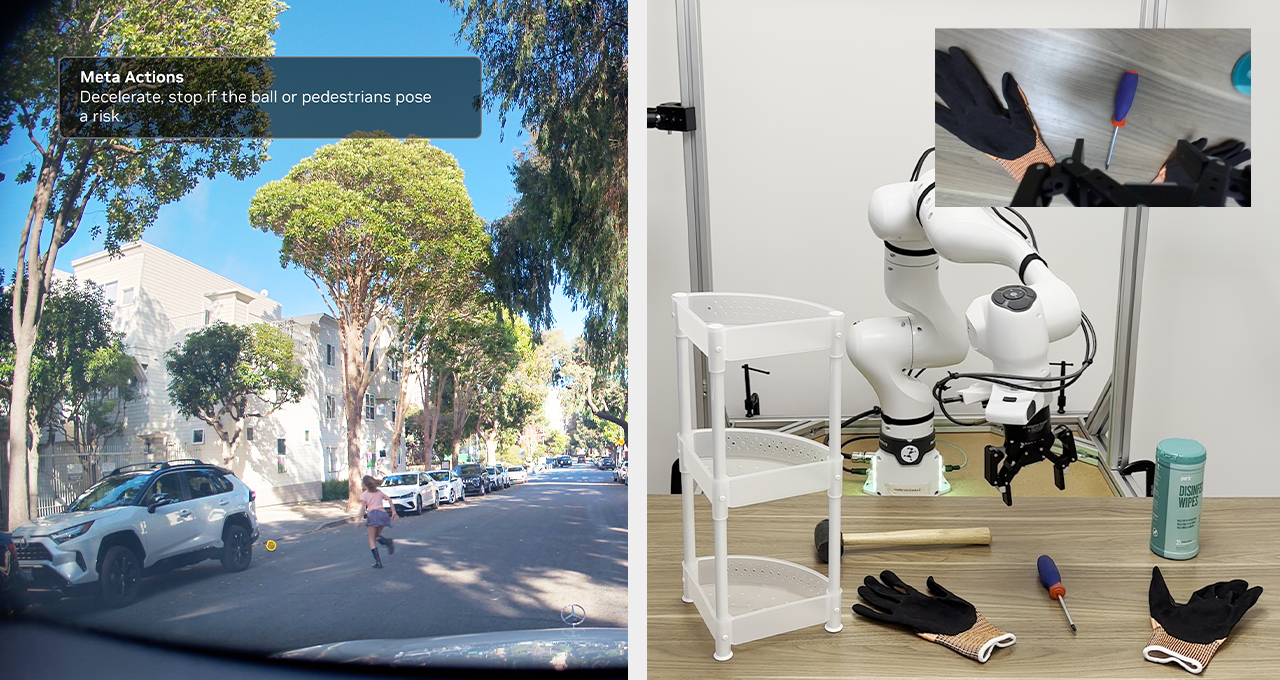
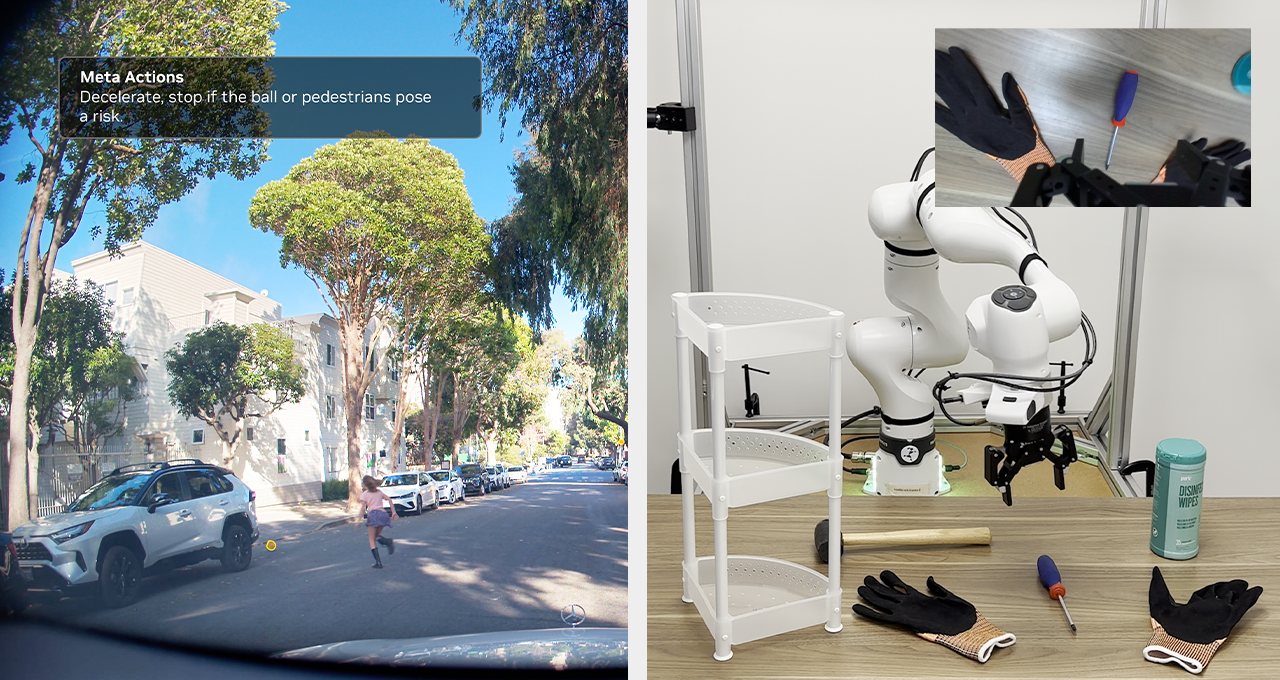
Source: NVIDIA Blog
The era of physical AI is upon us, promising to fundamentally reshape our interaction with the world. Yet, for all the hype surrounding advanced robotics and autonomous systems, a critical chasm has remained: the ability for these machines to truly *think*, plan, and make safe, effective decisions *before* they act. This isn’t just about faster processing or more sophisticated sensors; it’s about genuine cognition in a physical form. Enter Cosmos 3, a groundbreaking system that NVIDIA is championing, designed to bridge this gap and empower physical AI to move beyond mere reaction, towards proactive, intelligent deliberation. This isn’t just an incremental update; it’s a foundational shift that could define the next generation of intelligent machines, particularly as we look towards a more autonomous 2026.
Cosmos 3: Elevating Physical AI Beyond Reactive Paradigms
Cosmos 3 is far more than just another algorithm or machine learning model. It represents a comprehensive architectural leap, engineered to imbue physical AI systems with a profound capacity for perception, reasoning, and prediction. Instead of simply learning to execute a specific task through rote repetition, Cosmos 3 enables AI to construct and maintain an intricate internal model of the world. This includes understanding objects, their relationships, and the underlying physics governing their interactions. This crucial capability allows AI to grasp not just ‘what’ to do, but ‘why’ an action is necessary and ‘what will happen’ as a result. For robots operating in dynamic, unpredictable environments – think factory floors, busy city streets, or even surgical theaters – where every decision carries significant consequences, this foresight is absolutely paramount.
One of Cosmos 3’s most compelling features is its ability to synthesize knowledge from a diverse array of data sources. This isn’t limited to real-world sensor data or meticulously crafted simulations; it extends to natural language understanding. By integrating these disparate information streams, the AI can forge a deep, holistic understanding of its environment. This comprehensive grasp empowers physical AI to plan complex sequences of actions, anticipate potential outcomes, and dynamically adjust its strategies in real-time. This marks a significant departure from traditional AI systems, which often remain constrained by the specific datasets they were trained on. Cosmos 3, in essence, equips robots with a form of common sense, allowing them to navigate novel situations with a level of adaptability previously reserved for biological intelligence.
The Inner Workings: From World Modeling to Deliberate Action
Building an Internal World Model
At the core of Cosmos 3’s prowess lies its ability to build and continuously refine a detailed internal world model. This isn’t a static blueprint; it’s a dynamic, living representation that constantly updates based on new sensory input. AI systems powered by Cosmos 3 can, in a sense, ‘imagine’ various scenarios, evaluate different courses of action, and predict their outcomes before committing to physical execution. This mirrors the human cognitive process of mentally rehearsing a task or planning a sequence of steps, thereby minimizing risks and significantly enhancing efficiency.
This internal world model operates across multiple layers of information. At a fundamental level, the AI identifies objects and their attributes – a ball is round and rolls, for instance. Moving up, it comprehends physical laws (e.g., pushing an object makes it move) and causal relationships. This multi-layered understanding enables the AI to make nuanced decisions, such as how to move an object without disturbing others nearby, or how to safely navigate through a crowded space. It’s about understanding context, not just recognizing patterns.
Reasoning and Decision-Making
Once the world model is established, Cosmos 3 employs advanced reasoning techniques to evaluate potential actions. This involves simulating the consequences of each action within its internal model and selecting the optimal path based on predefined objectives. This process isn’t solely about finding the quickest solution; it carefully weighs factors like safety, energy efficiency, and adaptability to unexpected changes. This capability is what truly elevates Cosmos 3-enabled robots from mere automatons to genuinely intelligent agents.
This sophisticated reasoning allows physical AI to not only execute pre-programmed tasks but also to tackle novel, unforeseen problems. Imagine a delivery robot encountering an unexpected obstacle in its path. Instead of simply stopping or rerouting along a pre-determined course, Cosmos 3 empowers the robot to analyze the situation, explore alternative routes, and even interact with the environment to safely remove the obstruction. This represents a monumental leap in the autonomy and problem-solving capabilities of physical AI, moving us closer to truly intelligent robotic companions and workers.
Real-World Impact and the Future of Autonomous Systems
The potential applications of Cosmos 3 are vast and transformative, particularly in sectors demanding complex and safe physical interaction. We’re looking at:
- Industrial Robotics: Enhancing automation in factories, enabling robots to perform intricate assembly tasks, quality control, and material handling with unprecedented precision and safety. This will unlock new levels of efficiency and flexibility in manufacturing.
- Autonomous Vehicles: Significantly improving the perception and prediction capabilities of self-driving cars, allowing them to make superior decisions in complex traffic scenarios, thereby reducing accidents and increasing public trust.
- Service and Healthcare Robots: Developing robots capable of assisting humans in homes or hospitals, performing tasks like elder care, surgical assistance, or medical supply transport with a level of dexterity and reliability previously unimaginable.
- Space Exploration: Empowering exploration robots with greater autonomy to navigate unfamiliar terrains, collect samples, and conduct scientific experiments without constant human intervention, accelerating discovery in hostile environments.
- The AI Intelligence Paradigm Shift: What to Expect by 2026
- How AI Mental Health Tools Are Reshaping Care in 2026
- The AI Workforce Revolution: How Small Businesses Are Scaling with AI in 2026
- Amazon’s AI Leap: How Robot Intelligence Will Reshape Logistics in 2026
- The AI Job Future: How Employees Must Adapt by 2026
- FDA’s Elsa AI Switches From Claude To Gemini: What Sponsors Need To Know – Clinical Leader
- Southwest Airlines bans humanoid robots from flying in new policy – TribLIVE.com
As technology continues its relentless march forward, Cosmos 3 is poised to become a core foundation for the next generation of physical AI. Researchers at NVIDIA and other leading institutions are continuously refining similar models, ushering in a new era of collaboration between humans and intelligent machines. The ability to ‘think before acting’ will be the linchpin for physical AI to integrate safely and effectively into every facet of our lives. The stakes are high, and the implications are profound.
Conclusion
Cosmos 3 is not just another step; it’s a significant stride forward for physical AI, granting machines the capacity to think, plan, and make decisions with a level of intelligence and safety previously confined to science fiction. From industrial automation to autonomous vehicles and sophisticated service robots, this technology holds the power to profoundly transform numerous industries and elevate our quality of life. With these advancements, the question isn’t if robots will think, but how deeply and how safely they will integrate into our world. The future, with Cosmos 3 leading the charge, looks increasingly intelligent and autonomous. The implications for productivity, safety, and even our daily routines are immense, promising a future where robots are not just tools, but thoughtful collaborators.