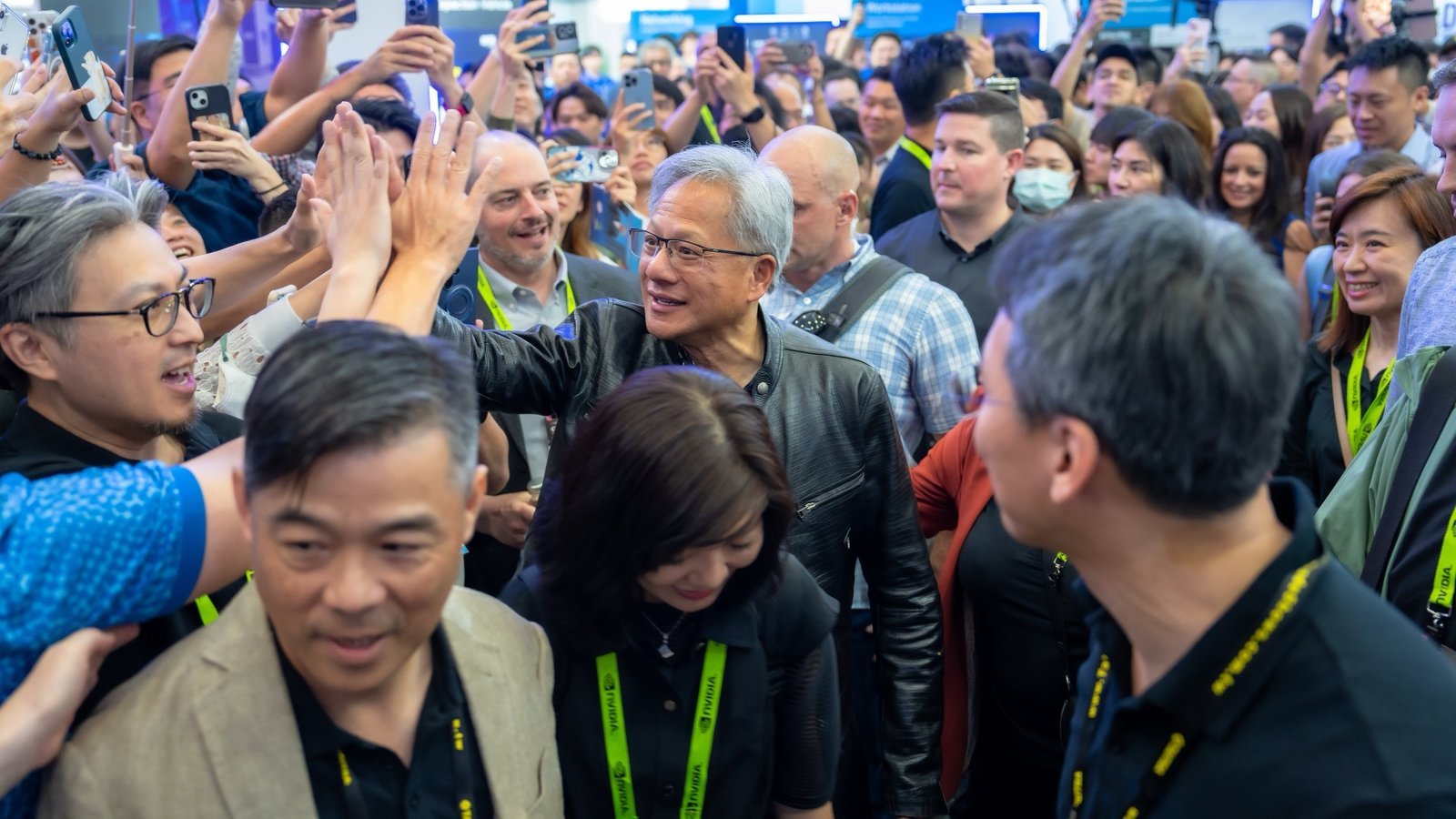
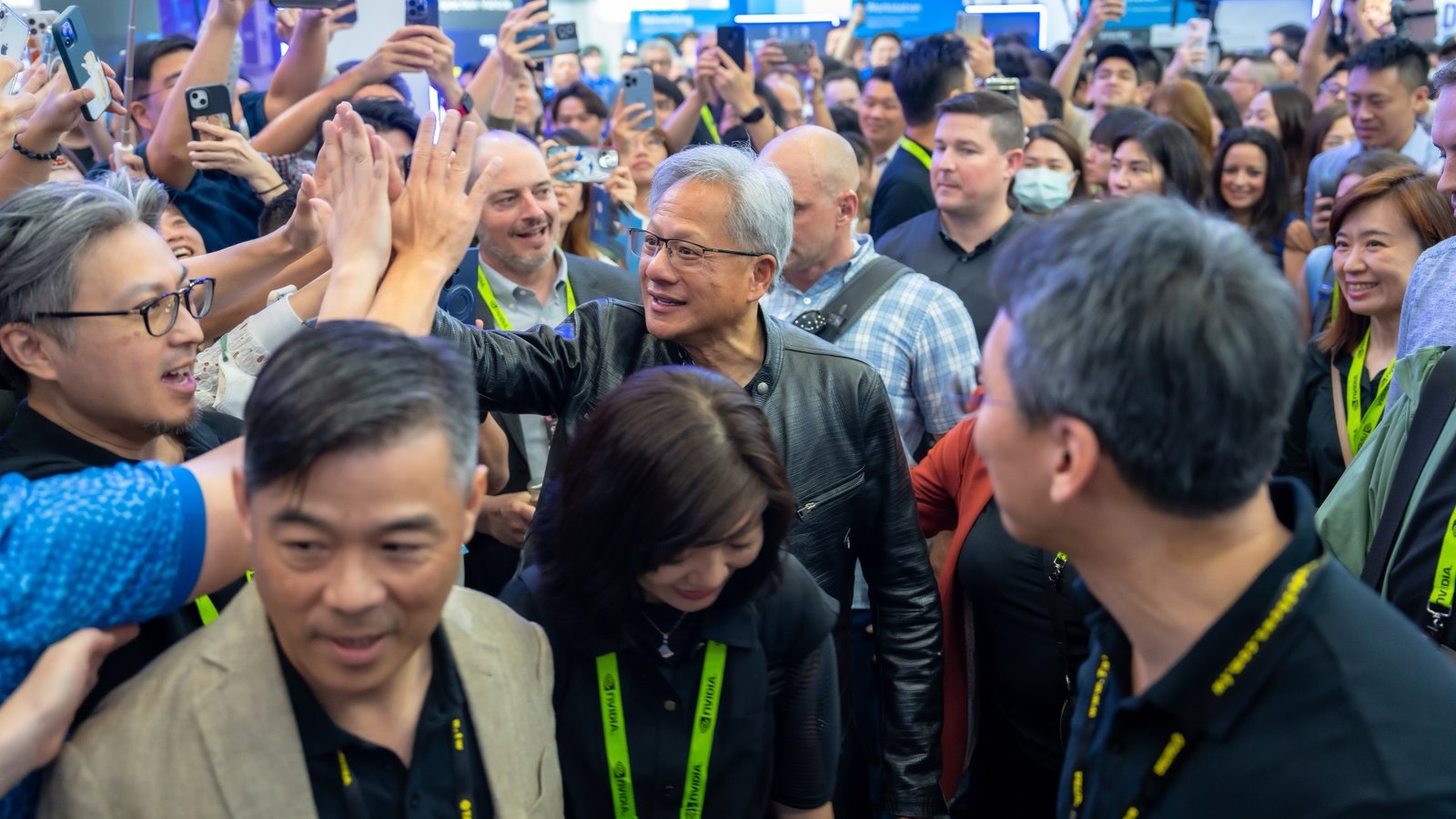
Source: NVIDIA Blog
Every year, the tech world converges on COMPUTEX, and within that bustling ecosystem, NVIDIA GTC Taipei invariably steals the show. It’s not just a conference; it’s a prophetic glimpse into the future of artificial intelligence, a strategic roadmap laid out by the company that has become synonymous with the AI revolution. This year, the insights from Taipei weren’t merely incremental updates; they painted a vivid picture of a deeply integrated, highly autonomous AI landscape, pushing the boundaries from data centers to the physical world. For developers, researchers, and industry leaders alike, GTC Taipei is the definitive compass for what’s next in AI, with a clear vision stretching to 2026 and beyond.
NVIDIA GTC Taipei: Architecting the Era of Ubiquitous AI
NVIDIA CEO Jensen Huang has consistently articulated a singular truth: continuous innovation is not just an advantage, it’s an existential imperative in the AI race. GTC Taipei underscored this philosophy, moving beyond the raw power of GPUs to emphasize comprehensive software platforms, advanced AI models, and practical applications that promise to fundamentally reshape daily life. This isn’t just about selling chips; it’s about building an entire ecosystem where AI can thrive, scale, and ultimately, become an invisible, indispensable force.
A standout concept from the event was the notion of ‘AI factories.’ Forget traditional data centers; these are purpose-built, hyper-optimized infrastructures designed to industrialize the production and deployment of AI at an unprecedented scale. Imagine a manufacturing plant where data is the raw material, AI models are the products, and applications are the finished goods, all processed with unparalleled speed and efficiency. This demands a symbiotic relationship between NVIDIA’s formidable hardware – its GPUs – and sophisticated optimization software, all within a robust development ecosystem. The construction and expansion of these AI factories are not just ambitious projects; they are the critical response to the insatiable demand for computational power and data processing in the burgeoning AI era. This strategic pivot highlights NVIDIA’s understanding that the future of AI isn’t just about individual breakthroughs, but about scalable, repeatable production.
The Vanguard of AI: Agentic and Physical Intelligence
Agentic AI: Beyond Automation, Towards Autonomy
One of the most rapidly evolving frontiers discussed at GTC Taipei was agentic AI. This isn’t just about systems performing single tasks; it’s about AI with the capacity for sophisticated planning, autonomous decision-making, and dynamic interaction with its environment. Picture an AI agent managing an intricate supply chain, optimizing complex manufacturing processes, or even autonomously handling data governance tasks. The promise of agentic AI is nothing short of revolutionary, offering exponential efficiency gains across sectors from finance to logistics and manufacturing. This represents a significant leap from reactive automation to proactive, intelligent autonomy, fundamentally altering how businesses operate and innovate.
Physical AI: Bringing Intelligence to the Real World
Complementing agentic AI, physical AI focuses on embedding artificial intelligence directly into robotic systems and physical devices, enabling them to execute real-world tasks with intelligence and adaptability. Envision autonomous factory robots, self-driving vehicles, or even smart medical devices assisting in surgical procedures. The convergence of AI and robotics is heralding a new era of automation, where machines not only perform tasks more efficiently but also possess the capacity to learn and adapt to novel situations. NVIDIA GTC consistently showcases groundbreaking advancements in this domain, underscoring the vast potential for real-world applications. This isn’t a distant future; it’s being built now, piece by intelligent piece.
Fueling the Revolution: Infrastructure and Chip Innovation
The explosive growth of AI demands a commensurate expansion of foundational infrastructure. NVIDIA remains at the forefront, developing new chip architectures like Blackwell and Grace Hopper, specifically engineered to deliver the immense computational power required by increasingly complex AI models. These chips are not merely about raw performance; they also prioritize energy efficiency, a crucial factor as data centers consume colossal amounts of electricity. Investing in chip research and development is the bedrock upon which the pace of innovation in the AI industry is sustained, ensuring that the hardware can keep pace with the software’s ambition.
Beyond silicon, NVIDIA’s focus on software and platforms is equally critical. Tools like CUDA, TensorRT, and NVIDIA AI Enterprise empower developers to seamlessly build, deploy, and manage AI applications. This tight integration between hardware and software is the linchpin for unlocking AI’s full potential, from cloud-based applications to edge devices. This synergistic approach cultivates a robust ecosystem, fostering collaboration and accelerating innovation across the global AI community. Without this holistic approach, even the most powerful chips would remain underutilized.
The Far-Reaching Impact of NVIDIA GTC Taipei
The announcements emanating from NVIDIA GTC Taipei carry profound implications across diverse industries. In healthcare, AI is accelerating drug discovery, enabling earlier disease diagnosis, and personalizing treatment regimens. In manufacturing, AI optimizes processes, minimizes waste, and enhances product quality. The automotive sector is undergoing a dramatic transformation with self-driving cars and advanced driver-assistance systems, all underpinned by NVIDIA’s AI technology.
Moreover, GTC Taipei serves as a vital platform for startups and researchers to present their groundbreaking ideas, attracting attention from potential investors and partners. This dynamic environment fosters healthy competition and accelerates the pace of innovation. We can anticipate that many of the technologies unveiled at GTC Taipei will become mainstream trends within the next few years, fundamentally shaping how we work, learn, and entertain ourselves. COMPUTEX provides an unparalleled stage for NVIDIA to showcase these transformative innovations, solidifying its role as a key orchestrator of the future.
Conclusion
NVIDIA GTC Taipei at COMPUTEX unequivocally reinforces its status as one of the most pivotal events on the global technology calendar. The breakthroughs in agentic AI, physical AI, AI infrastructure, and novel chip architectures are not merely engineering feats; they are crucial stepping stones towards a future where AI is central to every facet of life. With a clear trajectory extending to 2026 and beyond, we can anticipate increasingly intelligent and powerful AI applications, delivering immense benefits to society. The question isn’t if AI will change everything, but how quickly, and GTC Taipei provides the most comprehensive answer yet. The stakes are high, and NVIDIA is clearly playing to win, not just the hardware game, but the entire AI ecosystem.