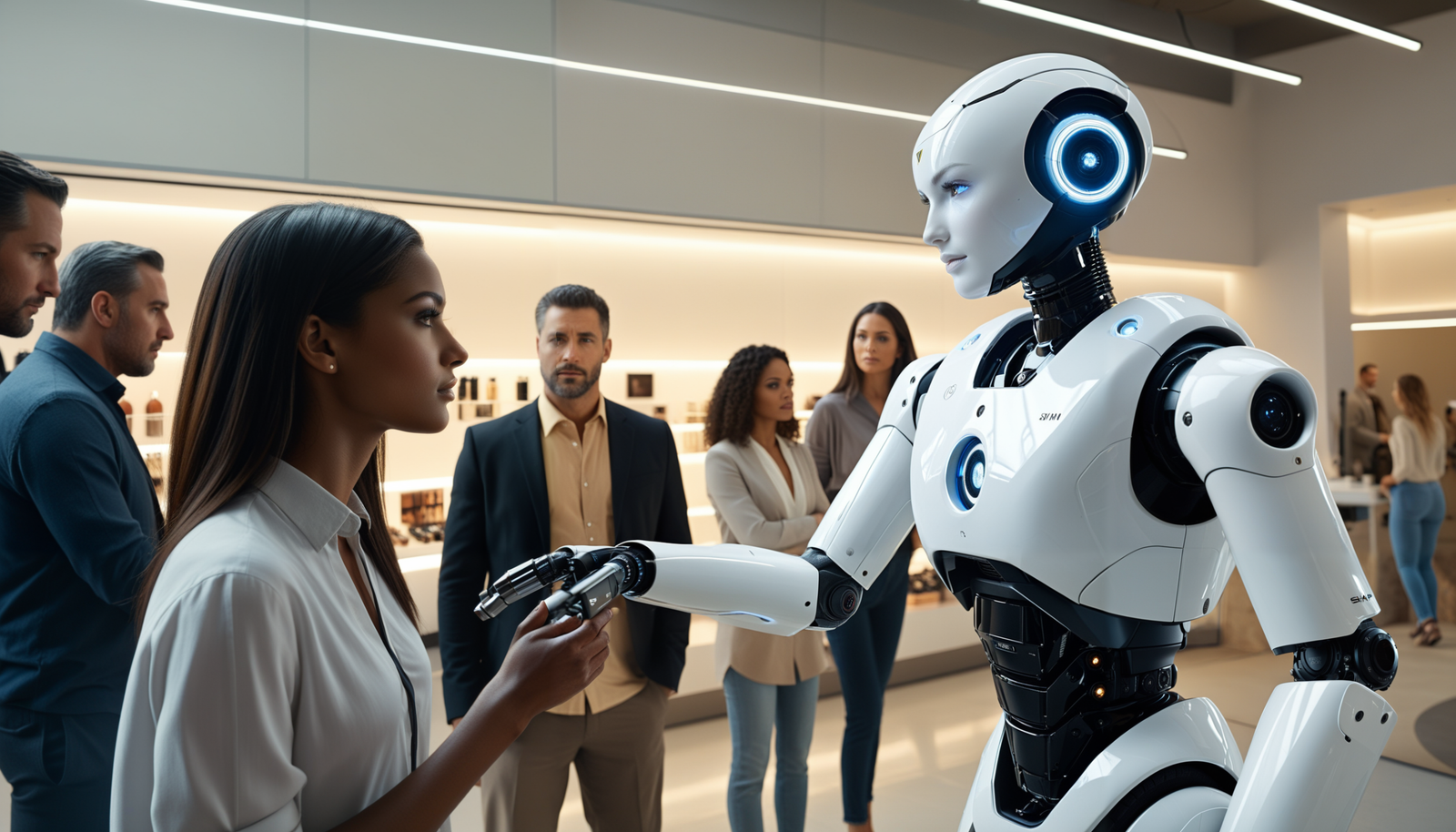
The service economy, once defined by human interaction and manual labor, is facing an unprecedented transformation. It’s no longer enough to simply automate a repetitive task; the new frontier of efficiency demands cognitive assistance. Enter the Gen AI robot—machines that don’t just follow code, but understand context, adapt to variables, and execute complex, nuanced tasks. These aren’t the clunky, programmed automatons of science fiction; they are sophisticated, adaptable digital workers poised to redefine what “service” means, promising a seismic shift in global business models.
The Generative Leap: How AI Service Robots are Changing Business
The shift is profound, moving far beyond simple automation. We are witnessing the rise of cognitive service delivery. Where older automation merely optimized physical processes, Gen AI robots leverage advanced natural language processing (NLP) and large language models (LLMs) to handle unstructured data and complex decision-making. They can interpret a customer’s vague request, troubleshoot an unexpected system failure, or guide a patient through a multi-step care plan—tasks that require human-level understanding.
The economic implications are massive. By mitigating the persistent labor cost pressures and addressing chronic shortages in service sectors, these robots promise efficiency gains that could unlock trillions in productivity. Companies are realizing that the investment isn’t just in hardware, but in a scalable, flexible workforce that doesn’t require breaks, salaries, or training downtime.
Sector Deep Dive: Where AI Robots are Making the Biggest Impact
The adoption curve is steep, with specific industries leading the charge. In Healthcare, robots are moving past simple delivery tasks. They are assisting with preliminary diagnostics, monitoring vital signs in real-time, and handling the most repetitive aspects of patient care, freeing up nurses and doctors for high-touch, complex interactions.
Similarly, the Hospitality and Retail sectors are undergoing rapid modernization. From automated check-in kiosks powered by facial recognition to personalized shopping assistants that guide customers through inventory and suggest complementary items, AI robots are creating hyper-efficient, tailored experiences. According to recent industry analysis, the acceleration of this trend is inevitable, as detailed in this source report.
The next wave of disruption, however, lies in logistics and infrastructure, where robots will tackle the complexities of supply chain management and preventative maintenance across vast, physical networks.
The Human Element: Ethics, Jobs, and the Future Workforce
The rapid integration of sophisticated AI service robots forces us to confront questions that transcend mere technological capability. The narrative often defaults to a simple binary: job displacement versus job augmentation. The reality, experts argue, is far more nuanced. Rather than eliminating human roles, advanced AI is forcing a radical redefinition of what constitutes human value in the workplace.
This shift mandates a proactive pivot toward ‘human-AI collaboration’ models. Future success won’t belong to companies that simply buy robots, but those that design symbiotic workflows where human intuition and AI computational power complement each other. This requires massive corporate investment in retraining, focusing on skills like complex problem-solving, emotional intelligence, and prompt engineering—skills that remain uniquely human.
However, this revolution is not without ethical guardrails. As robots handle sensitive tasks—from medical diagnostics to financial consultation—concerns over data privacy, accountability, and physical safety protocols become paramount. Who is liable when an autonomous system makes an error? How is the vast ocean of personal data being managed when it flows through machine learning models? Establishing robust, internationally standardized ethical frameworks is not optional; it is the bedrock upon which the entire service economy of 2026 will be built.
Conclusion
The evidence is clear: AI robots are not simply advanced tools; they are fundamental operational partners driving a radical redesign of service delivery. They are accelerating the pace of efficiency to levels previously deemed theoretical, promising to unlock trillions in untapped economic value.
This transformation represents one of the most profound shifts in global capitalism since the industrial revolution. The stakes are immense, impacting everything from the cost of healthcare to the logistics of basic daily life.
But as these machines become indistinguishable from highly skilled colleagues, the ultimate question shifts from technological feasibility to societal preparedness. How should governments and educational institutions restructure our foundational curricula and policy frameworks to prepare the entire global workforce for a life shared with advanced AI service robots?