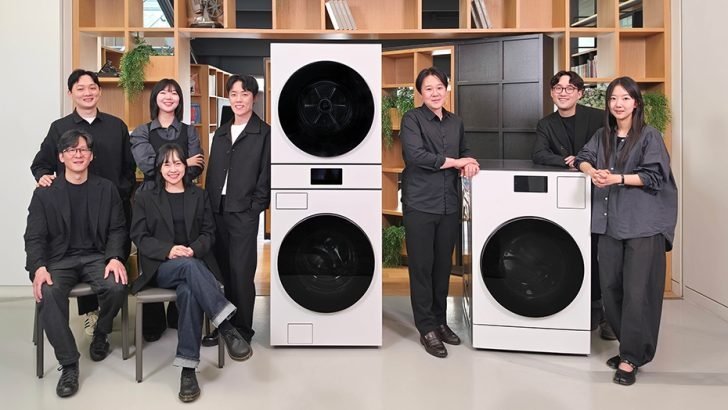
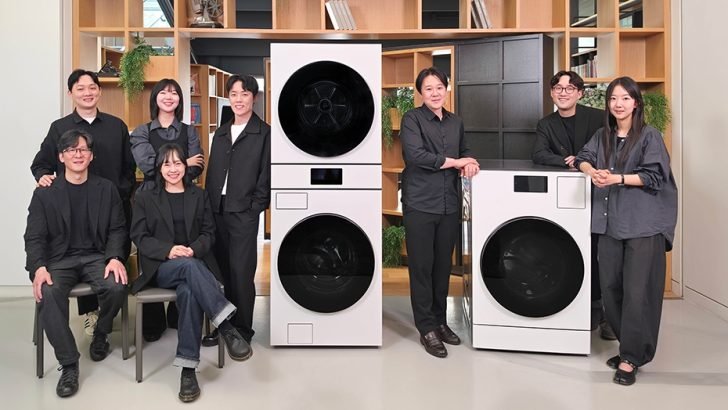
Source: Samsung Newsroom
The End of the Box: Why Function Is No Longer Enough
For decades, home appliances were relegated to the functional background—efficient, yes, but aesthetically invisible. They were the necessary, often ugly, utility boxes of domestic life. But the latest wave of technological success, exemplified by Samsung’s sweep at the Red Dot Design Award 2026, confirms a fundamental paradigm shift: the appliance is no longer merely a tool; it is a piece of architectural furniture. The industry has finally admitted that design is not a luxury add-on; it is a core performance metric. This pivot signals that the future of smart home design is less about raw processing power and more about seamless, emotional integration.
The concept of “Expressive Design” is the key phrase here. It suggests that technology must not just *work* efficiently, but must actively contribute to the emotional quality and visual narrative of the space it inhabits. When a washing machine is recognized not just for its wash cycle efficiency, but for its ability to blend into a modern kitchen island, it tells us that the value proposition has fundamentally changed. We are moving into an era where the technology must be invisible, yet profoundly expressive.
AI as the Architectural Mind: Beyond Simple Automation
The breakthrough isn’t just the physical redesign; it’s the intelligence powering it. The Bespoke AI Laundry line, for instance, demonstrates that AI has evolved past simple sensor readings (like “detecting load weight” or “measuring water levels”). Modern AI is becoming predictive, acting less like a programmed sequence of steps and more like a highly skilled, proactive domestic manager. It learns the rhythm of the household, anticipating needs before they are articulated.
This shift from reactive automation to predictive intelligence is crucial. If an appliance can analyze local weather patterns, correlate them with the user’s typical routine, and preemptively adjust its function—be it heating a room, adjusting humidity, or initiating a drying cycle—it ceases to be a mere gadget. It becomes a responsive element of the home’s biological system. The machine is effectively thinking about the inhabitant’s comfort, not just its own operational parameters. This is the defining characteristic of next-generation smart home design.
The Ecosystem Economy: Merging Interior Design and Code
The implications of this trend ripple out far beyond the appliance manufacturer. Architects and interior designers, historically separated from the realm of pure electronics, are now forced into a partnership with engineers. The ideal modern home is not a collection of separate, branded objects; it is a unified, responsive ecosystem. This requires a level of modularity and aesthetic flexibility previously unimaginable.
Consider the modern smart home as a dynamic, living organism. Instead of merely controlling lights and speakers, the system must manage the entire atmospheric experience. It must understand how a change in lighting affects the mood, how humidity affects the materials, and how the ambient temperature affects the comfort level. This level of integration demands a radical rethink of architectural planning, treating technology not as an add-on, but as a fundamental structural element.
For those designing these spaces, the challenge is marrying high functionality with minimalist aesthetics—a difficult balance that requires deep integration at the level of the wiring, the materials science, and the user interface. This convergence of disciplines is perhaps the most exciting frontier in modern construction and technology.
For deeper insights into the infrastructure required for these connected homes, check out reports on smart grid integration.
Key takeaways for the industry:
- Designers must prioritize interoperability over proprietary systems.
- Technology must be invisible, functioning as a natural extension of the built environment.
- The focus shifts from ‘what the device does’ to ‘how the device makes the user feel.’
This movement suggests that the most successful technological adoption will be the one that requires the least amount of conscious interaction, achieving true seamlessness. The goal is to make the complex feel intuitive, the mechanical feel organic, and the digital feel invisible.
If you are interested in the intersection of physical space and data, exploring spatial computing concepts is highly recommended.